Brexit has created new opportunities for the UK and Azerbaijan, a leading Azerbaijani MP has said.
“In my opinion, leaving the EU opened new perspectives for our mutual cooperation. After Brexit the UK is not limited any more in any way of cooperation with the world, including Azerbaijan” Javanshir Feyziyev, the Head of Azerbaijan-UK Interparliamentary Relations told T-VINE after meetings in Baku.
The MP explained that Azerbaijan’s efforts to diversify its economy and develop state infrastructure have opened up new areas for expanded collaboration with the UK, saying, “Currently industrialisation, agriculture and tourism are rapidly developing sectors of our economy. The production of modern products based on the latest green technologies intended for export is our priority for economic development.
“The system of national education also needs deep rational reforms, where the experience of the British education system could be extremely useful. All of these offer a wide spectrum of cooperation, which is welcomed by the Azerbaijani government.”
When contacted for comment, a UK Government spokesperson told T-VINE:
“The UK maintains a strong, close relationship with Azerbaijan, currently supporting reform efforts in various sectors of the Azerbaijani economy. We have been the single largest foreign investor in the country for many years.
“Our ministers meet regularly with Azerbaijan to discuss issues from trade and the economy to climate change, the importance of civil society, human rights and gender equality.”
Today, the United Kingdom🇬🇧 leaves the European Union and we are determined that relations with Azerbaijan will strengthen further. #brexit
The UK first recognised Azerbaijan as an independent state on 31 December 1991, amid the collapse of the USSR. Formal diplomatic relations between the two countries would follow in March 1992.
Owing to Azerbaijan’s strategic location, British forces also once maintained a presence in the country between 1918-1920, around the end of the First World War, which coincided with the short-lived Azerbaijan Democratic Republic before it fell to the Red Army and was absorbed by the Soviet Union.
According to Mr Feyziyev, since his country’s independence, “The UK was one of the first western countries who extremely accurately assessed investment opportunities and prospects for cooperation with Azerbaijan, starting from the early phases of our independence.
“The first large project between our countries, known as the “Contract of the Century”, was launched in 1994 and focused on Caspian oil and gas exploration.”
The 'Contract of the Century': a national strategy developed by the government was crowned with the signing of a ground-breaking Production Sharing Agreement (PSA) in September 1994 – a historic day for Azerbaijan. The PSA was signed between the State Oil Company of Azerbaijan Republic (SOCAR) & a consortium of 11 foreign oil companies from six nations for the development of an area that covered 3 major oil fields in the Azerbaijan sector of the Caspian Sea. Photo via BP
The country also benefited from advanced British scientific and technological capabilities ahead of other post-Soviet states, as well as business organisation and management knowledge.
Currently, official figures from Baku show UK foreign direct investment in Azerbaijan at around 30 billion USD, with a further 70 billion from the London headquartered oil and gas multinational British Petroleum (BP).
According to UK figures, over 400 British companies and around 4,000 British nationals are present within the country.
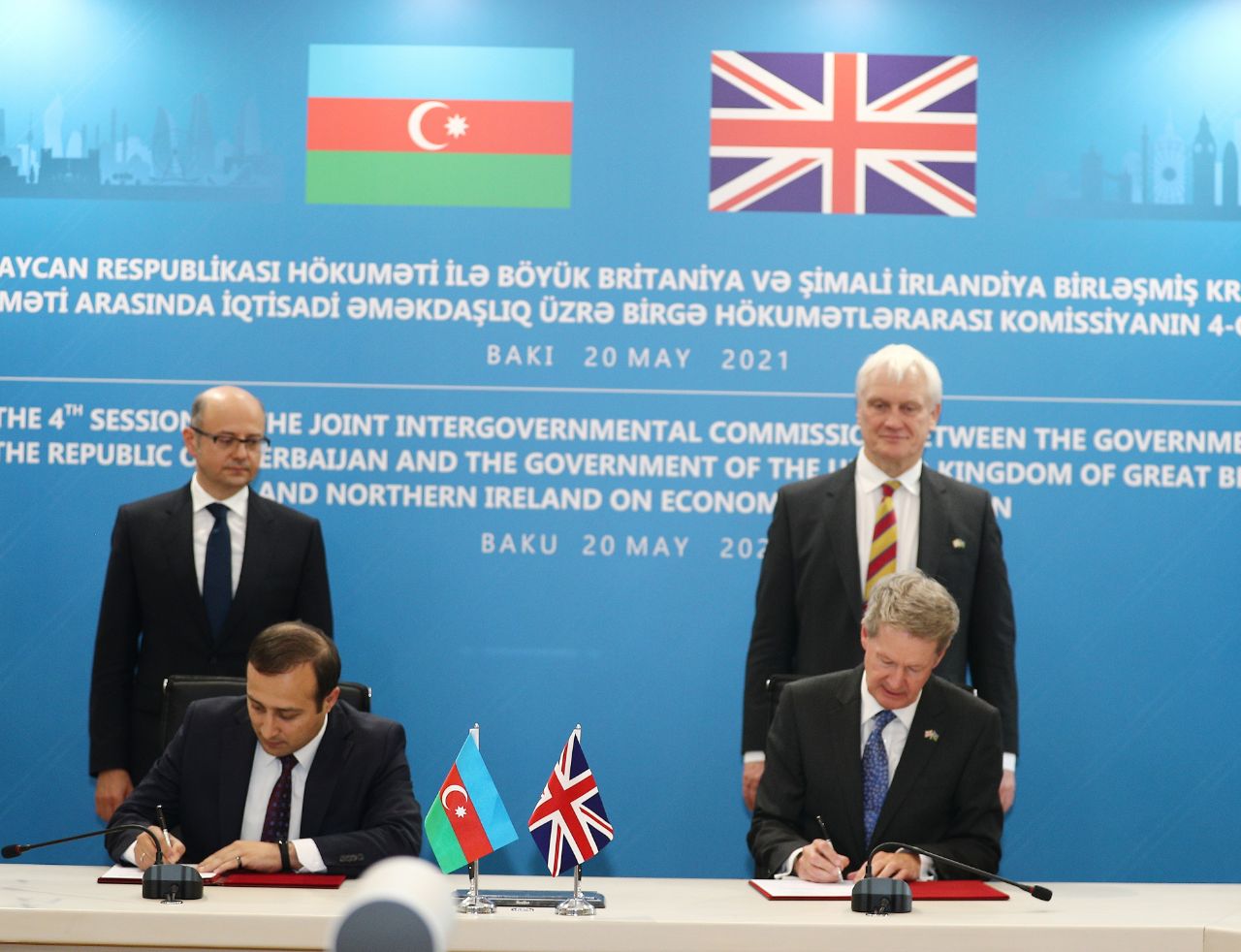
Recent political contacts have included visits to Azerbaijan from the UK’s Minister for European Neighbourhood and the Americas Wendy Morton last February, and the Department of International Trade Minister for Exports Graham Stuart in May. The Azerbaijani President Ilham Aliyev also visited London in 2018 at the invitation of the then Prime Minister Theresa May.
Going forward, the UK has also already offered to share its expertise in tax, customs and environmental matters to enhance Azerbaijan as a business environment, and is keen to expand cooperation in these areas. London is also committed to transitioning the trading relationship between the two countries from the EU-Azerbaijan Partnership and Cooperation Agreement into their own bilateral deal.
President of Azerbaijan Ilham Aliyev meets UK Prime Minister Theresa May at 10 Downing Street, London, 26 April 2018
UK helping Azerbaijan to rebuild Nagorno-Karabakh region after Armenia occupation ends
This week our UK MOD Counter Explosives expert and @ANAMA_gov_az colleagues surveyed parts of Fuzuli affected by land mines. The aim is to understand how the UK could work with Azerbaijan to tackle the threat from these deadly devices. 🇬🇧🤝🇦🇿 pic.twitter.com/kgBPpP9no6
Speaking at an event in the ruins of Agdam, the Assistant to Azerbaijani President Ilham Aliyev, Mr Hikmat Hajiyev who was present at the event, told a T-VINE reporter:
“Agdam was one of the vibrant and prosperous cities of Azerbaijan before the occupation, but what we can see in Agdam is complete destruction. Whenever we Azerbaijanis visit Agdam we have mixed feelings. On one side, we are proud that we are back, and it’s the end of the occupation, but from another side we can see destruction and vandalism have been committed to this vibrant city of 30,000 population, not only Agdam, but the entire Agdam region of Azerbaijan that accommodated more than 100,000 people.”
With reference to future plans for the city, he added that “Along with mixed feelings, we are looking to the future, to build a new Agdam, and to make Agdam as a smart city, and to make Agdam as a prosperous, peaceful city of Azerbaijan that can symbolise eternal peace, and that also symbolises that we would like to see Karabakh not associated with the war and blood, of course, without forgetting our memories and our past, we are looking to the future.”
At the event, officials showcased reconstruction plans with an exhibition that included the logos of both local and foreign participating companies. The British engineering consultancy firm Atkins, who opened a Baku office in 2016 were among those on display, as well as companies from other countries such as Germany, the US, Canada, and Turkey.
When asked about future opportunities for British firms in and around Nagorno-Karabakh, Mr Feyziyev said, “The liberated territories have been announced as a “green zone”, which means all infrastructure in those areas will be restored on the basis of ecological, healthy technologies.
Ambassador Tahir Taghizadeh (left) and Javanshir Feyziyev, MP & Head of Azerbaijan-UK Inter-Parliamentary Relations, have been at thee forefront in developing Azerbaijan-UK relations in recent years
“We are aware that British companies are going to invest in alternative energy projects in the liberated areas which is very welcomed by the government. The agenda of restoration of these territories is much wider, as eventually the IDPs must go back to their native lands to live.
“All infrastructure projects, as well as the construction of all public and residency buildings in the liberated areas are open to bid and I am sure British companies will not miss their opportunities to participate.”
He also added that the reconstruction projects “are based on new innovative and advanced technologies where the UK has great experience, as well as modern ‘know-how’.”
“For example, the Karabakh territories have the potential to generate up to 4,000 MWT of solar and 500 MWT of wind energy, which will allow the implementation of smart cities and smart villages in the liberated areas based on alternative energy,” the Azerbaijani MP explained before adding, “I believe the UK’s energy generation experience can be particularly helpful and mutually beneficial in these projects.”

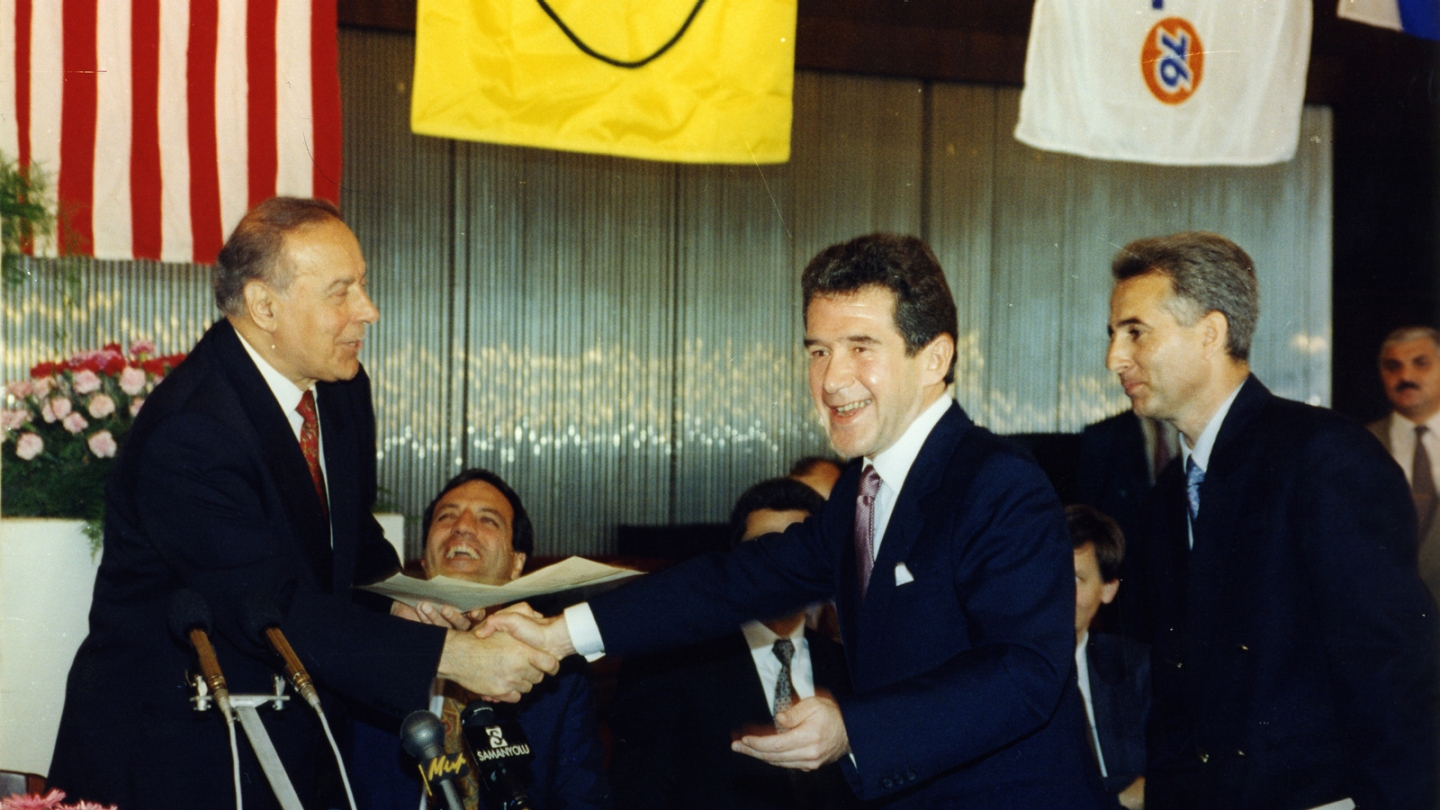 The 'Contract of the Century': a national strategy developed by the government was crowned with the signing of a ground-breaking Production Sharing Agreement (PSA) in September 1994 – a historic day for Azerbaijan. The PSA was signed between the State Oil Company of Azerbaijan Republic (SOCAR) & a consortium of 11 foreign oil companies from six nations for the development of an area that covered 3 major oil fields in the Azerbaijan sector of the Caspian Sea. Photo via BP
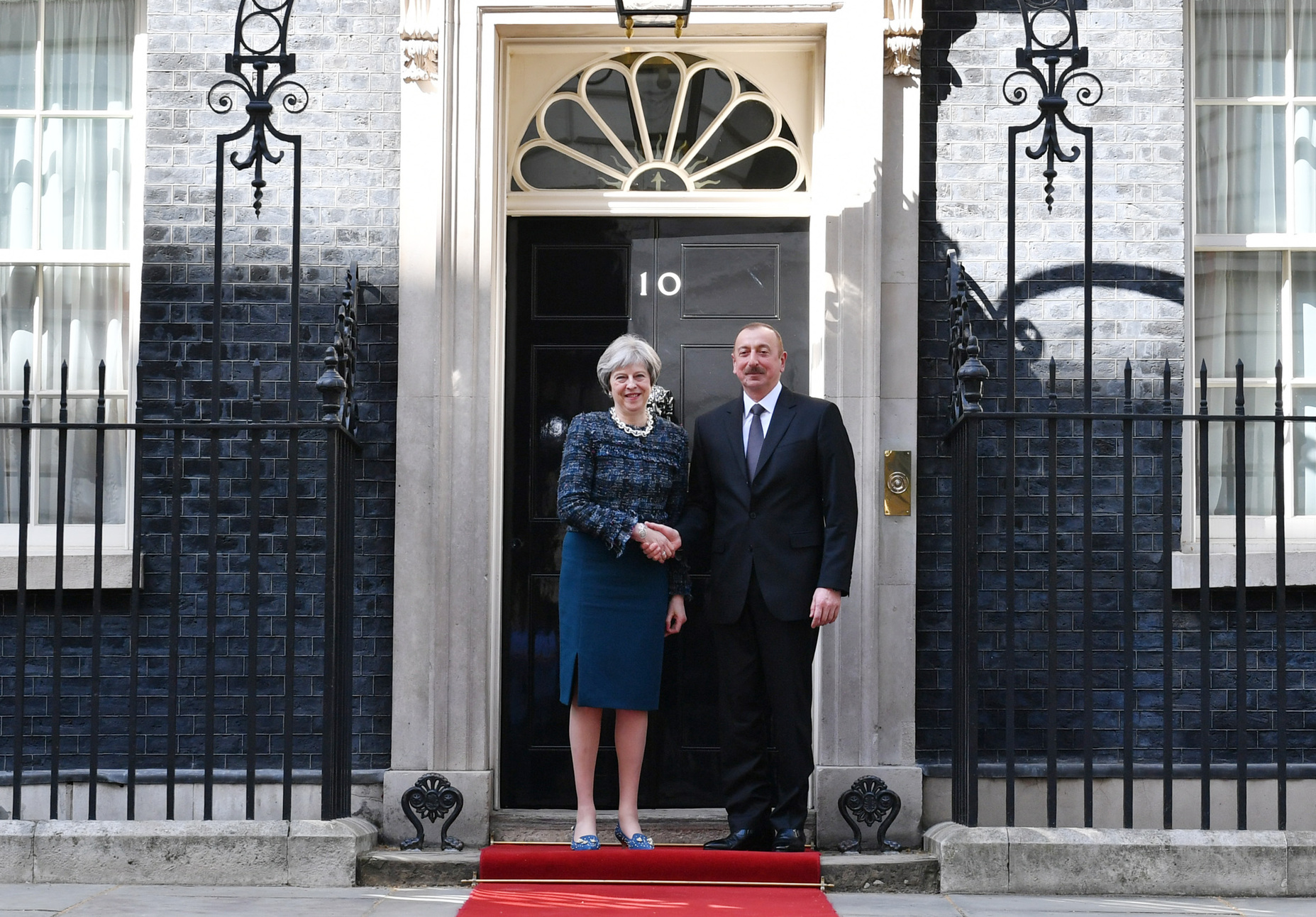 President of Azerbaijan Ilham Aliyev meets UK Prime Minister Theresa May at 10 Downing Street, London, 26 April 2018
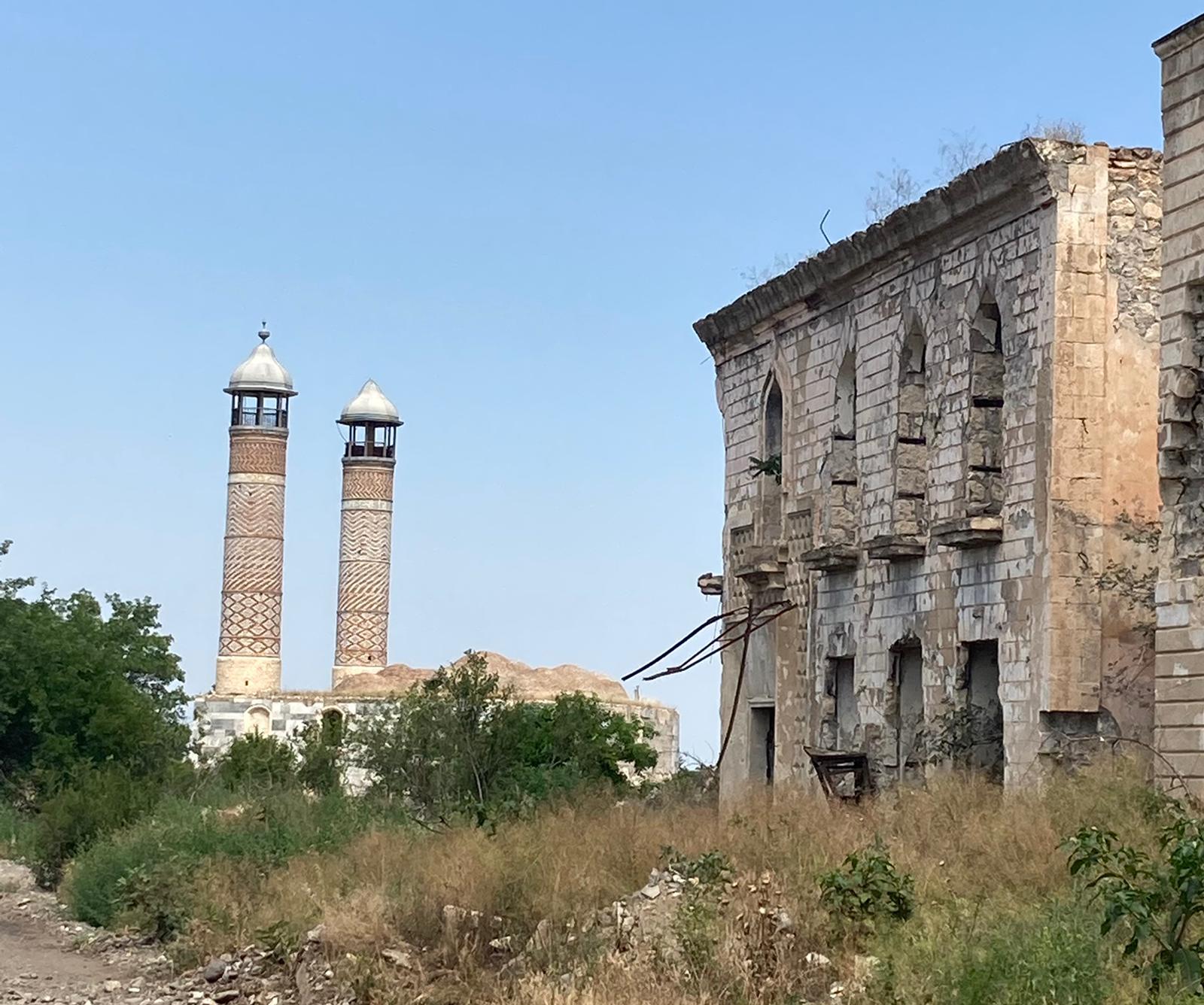 Juma Mosque, Agdam, Azerbaijan, June 2021. Photo © Edward Rowe
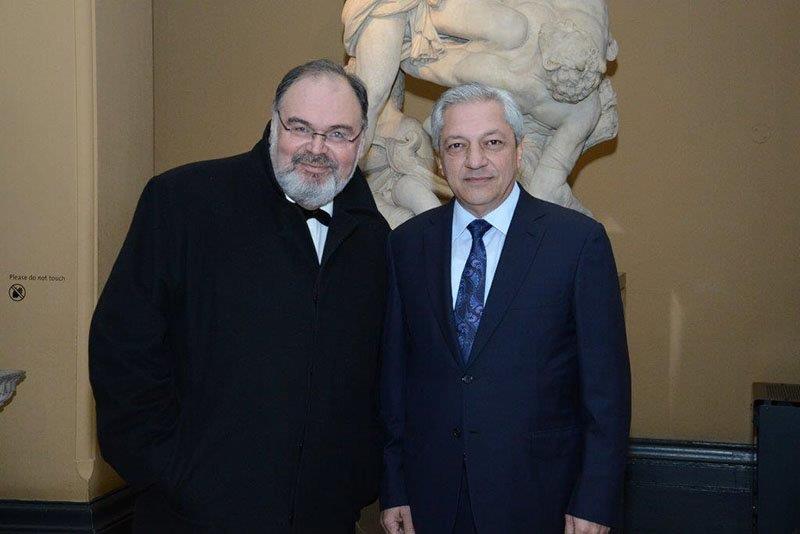 Ambassador Tahir Taghizadeh (left) and Javanshir Feyziyev, MP & Head of Azerbaijan-UK Inter-Parliamentary Relations, have been at thee forefront in developing Azerbaijan-UK relations in recent years