

London film fans are in for a rare treat this September, when independent Clerkenwell cinema The Nickel turns its screen over to some of the strangest, boldest and most inventive films from Turkish cinema.
Across three Wednesday double bills, the 37-seat repertory cinema will screen six Turkish films spanning more than three decades – from a 1953 Istanbul-set adaptation of Dracula and Metin Erksan’s notorious Turkish take on The Exorcist, to a female Hamlet, surreal feminist fantasy, and the wonderfully unrestrained world of 1970s and ’80s “Turksploitation”.
Four of the titles form part of a collaboration between The Nickel and Pera Film, the film programme of Istanbul’s Pera Museum, called So, What Was Avant-Garde?. Pera describes the selection as Turkish genre films dating from the 1950s to the late 1980s that “broke away from classical conventions”, embracing horror, fantasy and thriller filmmaking.
The Nickel then rounds off September with two further cult classics that demonstrate Yeşilçam’s famously fearless approach to reinterpreting international blockbusters: Three Giant Men (3 Dev Adam) and Badi, better known abroad as “Turkish E.T.”.
Dracula and the Devil open the season
The Turkish screenings start on Wednesday 2 September with Mehmet Muhtar’s Dracula in Istanbul (Drakula İstanbul’da, 1953).
Based partly on Ali Rıza Seyfi’s 1928 novel Kazıklı Voyvoda, the film relocates Bram Stoker’s famous vampire story to contemporary Türkiye. A young lawyer travels from Istanbul to Romania to conduct business with the mysterious Count Dracula, only to discover on his return home that the Count has followed him.
Pera Film describes Dracula in Istanbul as the earliest surviving Turkish horror film, with the film appearing in a newly restored 4K version supported by Sinematek/Sinema Evi. The Nickel also highlights its place in Dracula screen history, including its use of prominent vampire fangs and scenes of Dracula scaling his castle walls.
It is followed that evening by one of Turkish cinema’s most infamous cult films: Metin Erksan’s Şeytan (1974).
Released shortly after William Friedkin’s The Exorcist, Erksan’s film offers a distinctly Turkish reworking of the story. Twelve-year-old Gül becomes possessed after experimenting with a Ouija board, with doctors unable to explain her increasingly disturbing behaviour before her mother turns to an exorcist for help.
Made on far more modest resources than its Hollywood inspiration, Şeytan has over the decades acquired international cult status as one of the great curiosities of 1970s Turkish genre cinema.
A female Hamlet meets Aaahh Belinda
The Turkish strand returns on Wednesday 16 September with two films that take a much more surreal look at identity and gender.
First is Metin Erksan’s The Female Hamlet (1976), also known as İntikam Meleği – Kadın Hamlet. Shakespeare’s Prince of Denmark becomes a young Turkish woman who returns home from studying drama in America to discover that her father has been murdered and her uncle has married her mother.
What follows is an extraordinary collision of Shakespeare, Yeşilçam melodrama and experimental cinema, with Hamlet feigning madness as she sets about uncovering the truth and avenging her father. Pera Film specifically cites the movie as one of the programme’s key examples of Turkish avant-garde genre filmmaking.
The second screening that evening is Atıf Yılmaz’s much-loved Aaahh Belinda (1986).
The wonderfully inventive fantasy centres on theatre actress Serap, who reluctantly accepts a part in a television shampoo advert. During filming, however, she suddenly finds herself trapped inside the fictional world of the commercial as Naciye – a married housewife with two children – while everyone around her insists this is her real identity.
Funny, surreal and increasingly unsettling, Yılmaz uses the film’s fantastical premise to explore female identity, social expectations and the roles imposed on women.
Captain America, an evil Spider-Man and the Turkish E.T.
If the first four films illustrate Turkish cinema’s more experimental side, the final double bill on Wednesday 30 September takes audiences deep into the gloriously lawless territory for which cult Yeşilçam cinema has become internationally renowned.
T. Fikret Uçak’s Three Giant Men (3 Dev Adam, 1973) brings together three characters who copyright lawyers would probably prefer never to have met.
Istanbul is terrorised by a criminal gang led by an evil version of Spider-Man, prompting the authorities to call on Captain America and Mexican masked wrestler Santo to save the city.
Completely unauthorised and cheerfully unconcerned with Marvel continuity, the low-budget superhero mash-up has become one of the most celebrated examples of so-called “Turksploitation”, combining crime, action, comic-book fantasy and homemade effects into a film unlike almost anything Hollywood could have produced.
Bringing the Turkish programme to a suitably eccentric end is Zafer Par’s Badi (1983), widely nicknamed “Turkish E.T.”.
Arriving in the wake of Steven Spielberg’s blockbuster, Badi similarly tells the story of a young boy who befriends a strange visitor from another world. Yet its handmade special effects, limited budget and unmistakably Turkish setting have transformed what might once have been dismissed as an imitation into a genuine cult favourite in its own right.
For audiences accustomed to the celebrated dramas and arthouse films associated with Turkish cinema, The Nickel’s September screenings offer the opportunity to encounter a very different filmmaking tradition – one in which directors borrowed, adapted, subverted and sometimes gleefully disregarded the rules to create something unmistakably their own.
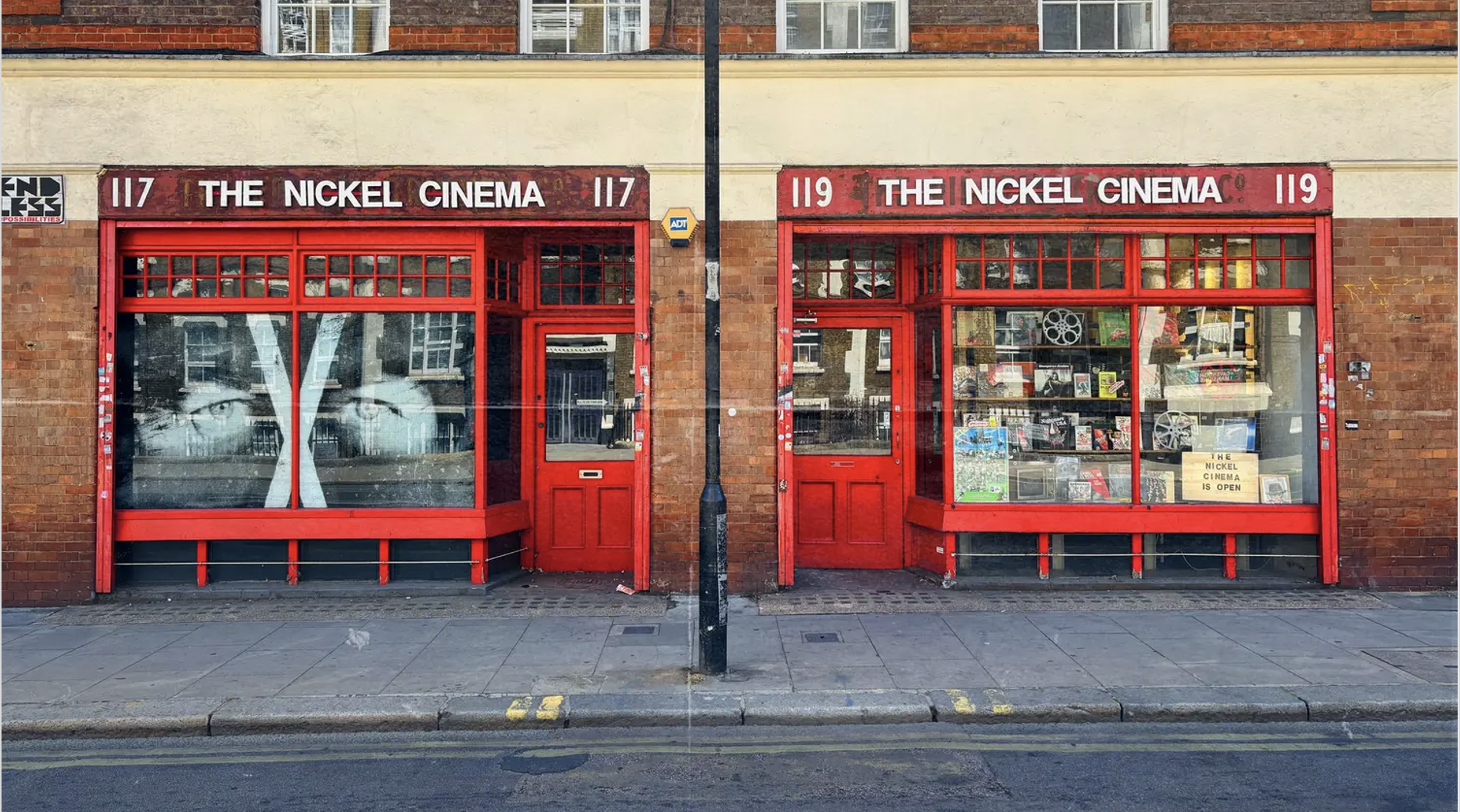
It is also precisely the type of cinema The Nickel was created to champion. Opened in Clerkenwell in 2025, the fiercely independent repertory venue specialises in underseen, transgressive and unusual films, screening everything from original 16mm prints and VHS to digital restorations. With just 37 seats, those keen to experience these Turkish cult treasures on the big screen would be wise to book ahead.
Event details -
Wednesday 2 September 2026
Dracula in Istanbul – 6.20pm
Şeytan – 8.45pm
Wednesday 16 September 2026
The Female Hamlet – 6.30pm
Aaahh Belinda – 8.45pm
Wednesday 30 September 2026
Three Giant Men (3 Dev Adam) – 6.30pm
Badi aka Turkish E.T. – 8.45pm
Venue: The Nickel, 117–119 Clerkenwell Road, London EC1R 5BY
Nearest stations: Chancery Lane, Farringdon and Holborn
Age: All six screenings are rated 18
Tickets: Available from The Nickel website.
See the full programme and book tickets at The Nickel