

United Nations Secretary-General António Guterres has concluded a rare visit to Cyprus by announcing plans for a new expanded meeting aimed at preparing the ground for the resumption of formal negotiations on the island’s future.
The visit – the first by a serving UN secretary-general in more than 16 years – was intended to demonstrate Guterres’ personal commitment to the Cyprus peace process, assess the positions of the two sides and explore whether sufficient common ground exists to restart talks, which have been suspended since the collapse of negotiations at Crans Montana in 2017.
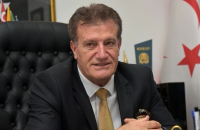
During his stay, Guterres held separate meetings with the Greek Cypriot leader Nikos Christodoulides and Tufan Erhürman, the Turkish Cypriot leader and President of the Turkish Republic of North Cyprus. He later hosted the two leaders at a private dinner before meeting them jointly at the UN’s Good Offices Mission in the buffer zone in Lefkoşa/Nicosia.
The UN chief also visited the Committee on Missing Persons’ anthropological laboratory, laid a wreath at a memorial to fallen UN peacekeepers and met negotiators, members of the bi-communal technical committees and civil society representatives.
Speaking after the joint meeting with the two leaders on Wednesday, Guterres said resolving the Cyprus problem was “absolutely crucial” not only for Cypriots but also as a source of stability in an increasingly volatile region.
“I do believe that a solution in Cyprus is absolutely crucial, not only to preserve the interests and the peace of the Cyprus people, but also as a factor of stability in what is becoming a dangerously unstable region,” Guterres told a news conference after meeting with the island’s rival leaders”, the UN chief told the press conference.
He stressed, however, that the UN could support and facilitate a settlement but could not impose one.
“It depends obviously on the Cypriots themselves,” he said, adding that Cyprus’s guarantor powers — Türkiye, Greece and the United Kingdom — also had an important role to play.
Cyprus is located in the Eastern Mediterranean and is surrounded by conflict. It is just 130 miles away from Lebanon and 210 miles from Israel. Under Christodoulides, the Greek Cypriot side has sought to leverage its geographic proximity to the Middle East and act as a gateway into the European Union, while also seeking closer ties with countries in the region, notably Israel.
Guterres, whose term as UN Secretary-General concludes at the end of this year, announced that he intends to convene another informal “5+1” meeting involving the two Cypriot leaders, the three guarantor countries and the United Nations. However, he said this would only take place after “adequate preparations” had been completed on confidence-building measures, the methodology governing future negotiations and the substance of a possible settlement. No date was announced.
Christodoulides said his objective remained to create the conditions for negotiations to resume from where they ended at Crans Montana. Welcoming Guterres’ involvement, he told the UN chief: “We need good news in Cyprus. We need good news in the region. We need good news internationally.”
Erhürman said he was “more hopeful” about the prospects for a settlement following the visit. He welcomed Guterres’ focus on confidence-building and negotiating methodology but reiterated that the Turkish Cypriot side did not want talks “for the sake of negotiations” or another expanded meeting without a realistic prospect of results.
The Turkish Cypriot leader said meaningful progress was needed on confidence-building measures and that any renewed process must have a clearly defined, results-orientated structure, including respect for Turkish Cypriot political equality.
The immediate next step is expected to involve further diplomatic work by UN envoy María Ángela Holguín and the two sides to narrow their differences and identify practical confidence-building measures. If sufficient progress is achieved, Guterres is likely to convene the proposed 5+1 meeting later in 2026, potentially providing the formal launchpad for a new round of comprehensive negotiations.
Cyprus has been politically divided since December 1963 and militarily divided into two ethnic zones, a Turkish North and a Greek South, since 1974 following a decade-long conflict that destroyed the partnership Republic of Cyprus. UN-backed efforts to reunite the two sides have repeatedly failed, most notably in 2004 and 2017. Turkish Cypriots accuse Greek Cypriots of not wanting to share power, and Greek Cypriot demands for a deal include the end of the Guarantees, removing the right of Türkiye, Greece and the United Kingdom to militarily intervene, and for all refugees to return ‘home’.
RELATED ARTICLES
UN chief to visit Cyprus in bid to revive unification talks, 16 July 2026