
At least 30 children, most of them British, may have been conceived at fertility clinics in North Cyprus using sperm or egg donors different from those selected by their parents, according to an expanding BBC investigation.
The new figure represents a significant increase on the seven children whose families featured in the BBC’s original investigation earlier this year and has prompted renewed scrutiny of fertility treatment in the Turkish Republic of North Cyprus (TRNC).
The allegations remain under investigation and have been strongly disputed by one of the centres named in the BBC report.
BBC News said parents of the 30 children believe the anonymous donors they carefully selected — based on characteristics including medical history, appearance, personality, education and interests — may not have been used during their IVF treatment.
Around half of the children were conceived following procedures at the Doğuş IVF Centre, according to the BBC. Eleven of the 30 children have since undergone commercial DNA testing, with results indicating genetic ancestry from Türkiye or neighbouring countries when parents say they had selected donors from Western Europe.
One of the mothers interviewed by the BBC, identified as Rachel, underwent treatment at Doğuş in 2012 after selecting a Danish sperm donor. She told the broadcaster that subsequent DNA testing involving her now 13-year-old son confirmed she was his biological mother but led her to believe that the sperm donor she had selected had not been used.
The BBC also contacted Danish sperm bank Cryos International, which said it could find no record of ever supplying sperm to Doğuş. It said the clinic had been blacklisted in 2016 following concerns arising from another patient's treatment.
TRNC Health Ministry launched investigation in April
The TRNC government has previously stressed that it is taking the allegations seriously.
Following the BBC’s initial investigation involving seven children, Health Minister Dr Hakan Dinçyürek told state broadcaster BRT on 2 April that his ministry was treating the media reports not simply as allegations, but effectively as a formal notification requiring investigation.
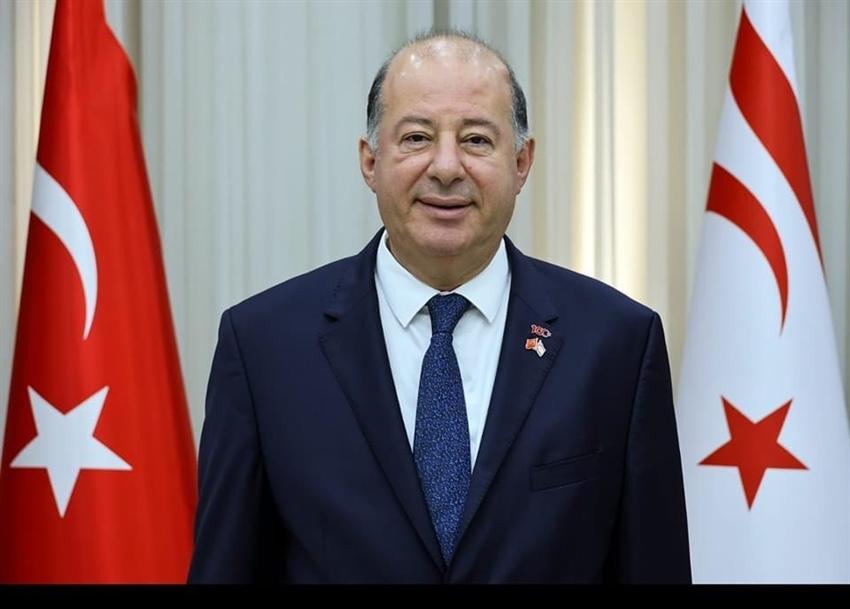
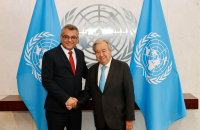
Health Minister Dr Hakan Dinçyürek, pictured above launched an investigation in April 2026 when the BBC's IVF allegations first surfaced
Dinçyürek said officials had visited the relevant centre and requested records and other information, adding that the findings would be made public regardless of the outcome.
“Nobody should have any doubts; we are doing what is necessary legally,” Dinçyürek said at the time, adding that criminal or administrative proceedings would be pursued if warranted.
The Health Minister is himself a doctor. The Gazimağusa-born physician graduated from Ege University Faculty of Medicine before specialising in orthopaedics and traumatology at Istanbul University. Dinçyürek worked as an orthopaedic and trauma specialist at Lefkoşa’s Dr Burhan Nalbantoğlu State Hospital for more than two decades before entering politics and has served as Health Minister since August 2023.
Back in April, the Health Minister told the TRNC Parliament that if any procedural wrongdoing or abuse was established, the authorities would take whatever action was necessary — including potentially closing an IVF centre.
Dinçyürek also noted that some of the allegations concerned treatment carried out before the introduction of the TRNC’s 2016 Cell, Tissue and Organ Law, acknowledging that the earlier regulatory framework had been considerably less stringent.
However, the BBC said in its latest report that it had not received a subsequent update on the outcome of the investigation despite repeated approaches to the Health Ministry.
That has now become an issue domestically too.
On Wednesday, 19 August, the Health Committee of left-wing opposition Toplumcu Demokrasi Partisi (TDP) called on Dinçyürek and the TRNC Health Ministry to disclose how far the investigation has progressed, how many centres and treatment cases have been examined and what, if anything, investigators have found.
The party said the seriousness of the allegations demanded an independent, comprehensive and transparent investigation, while also stressing that allegations relating to a small number of clinics or individuals should not be allowed to cast suspicion over North Cyprus's entire IVF sector.
Miracle IVF rejects BBC portrayal
There has also been a fresh response from Miracle IVF Centre, another clinic referred to in the BBC investigation.
In a statement issued on Wednesday, Miracle described the BBC report, as it related to the clinic and Dr Firdevs Uğuz Tip, as “incomplete, one-sided and misleading”, arguing that allegations concerning treatments between 2011 and 2015 pre-dated Miracle’s existence.
The centre cited a TRNC Health Ministry document dated 23 July 2026 which, it says, confirms that Doğuş and Miracle are separate legal and institutional entities.
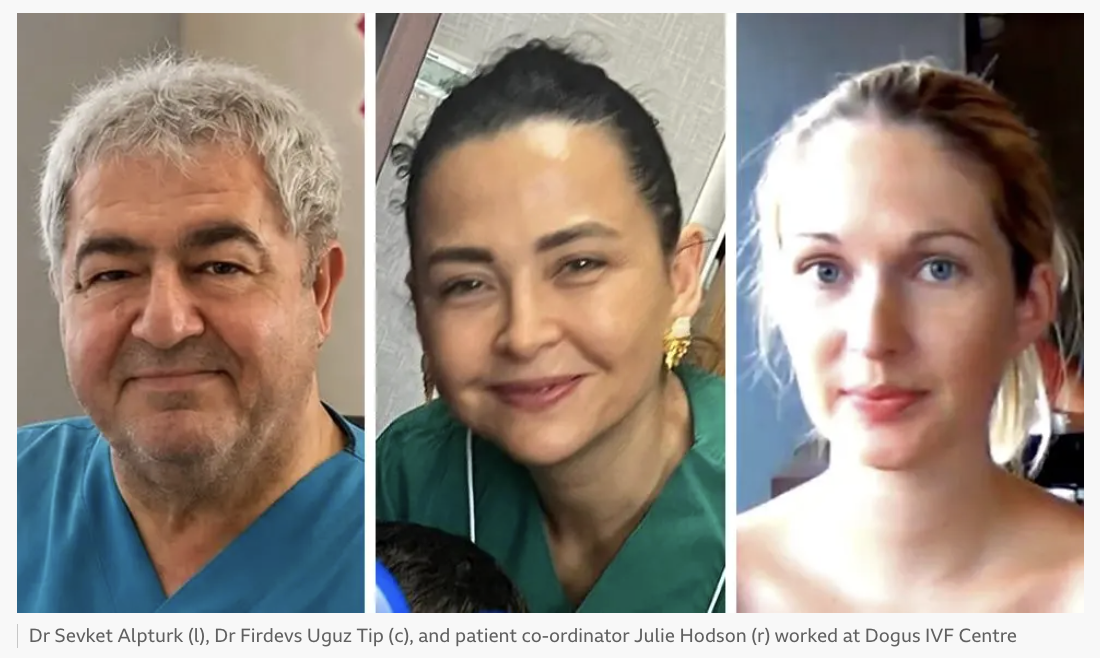
According to Miracle, Dr Uğuz Tip worked at Doğuş between 2009 and 2015 as a gynaecologist and obstetrician, while Miracle did not begin operating until April 2019, when she became its doctor responsible for IVF treatment.
The clinic said no patient records, consent forms or other documentation had been produced that established personal or institutional wrongdoing on its part or by Dr Uğuz Tip. It has reserved the right to take legal and administrative action over reporting it considers damaging to its reputation.
Dr Uğuz Tip has also denied wrongdoing to the BBC. Two other former Doğuş staff members named in the broadcaster’s investigation, Dr Şevket Alptürk and patient co-ordinator Julie Hodson, did not respond to the BBC’s questions.
The allegations have attracted considerable international attention since the BBC first reported them in March. Donor Conception Network, a UK charity supporting donor-conceived families, said the revelations could understandably cause anxiety among families who had undergone treatment in North Cyprus, while stressing the importance of establishing the truth wherever clinics or individuals may have acted improperly.
IVF an important part of North Cyprus's medical tourism sector
The BBC’s allegations also have potentially wider implications for North Cyprus, where IVF has developed into a significant branch of the country's medical tourism industry, attracting patients from Britain, continental Europe, Türkiye, the Middle East and further afield.
A Turkish Cypriot report in May 2026 put the number of licensed IVF clinics in the TRNC at 17, up from 13 centres recorded in Health Ministry statistics nine years earlier.
The most detailed publicly available official figures date from 2017, when 1,754 IVF procedures were carried out at TRNC fertility centres. Local newspaper Havadis, reporting Health Ministry statistics, said patients were travelling to North Cyprus from as many as 57 countries, illustrating how an industry serving a relatively small domestic population had developed a considerable international clientele.
A subsequent academic study into medical tourism in North Cyprus identified IVF as the most sought-after medical treatment among overseas patients covered by its research, while Britain emerged as an especially important source market.
Precisely how much the industry is now worth to the TRNC economy is harder to establish. There appears to be no recently published official figure for the sector's annual turnover or the number of overseas IVF patients treated each year.
Historical figures nevertheless indicate its economic significance. In 2017, when treatments were reported to cost between €5,000 and €7,000, the 1,754 procedures recorded that year would equate to roughly €8.8 million to €12.3 million in treatment expenditure alone, before taking into account the additional contribution overseas patients and accompanying family members make through accommodation, restaurants, transport and other spending.
More recent academic research has described the TRNC as a competitive fertility-tourism destination, helped by comparatively affordable treatment, its proximity to Europe and the Middle East and the range of reproductive treatments available. However, researchers have also identified weaknesses including inadequate sector-wide data collection, patient tracking and international accreditation.
That combination makes the outcome of the Health Ministry's investigation especially important. The issue is not simply the conduct of individual clinics: confidence in regulation and the integrity of donor records is crucial to the reputation of an internationally-facing sector on which legitimate IVF providers and a wider network of tourism businesses also depend.
Dinçyürek has repeatedly pledged that whatever the investigation establishes will be made public and that wrongdoing, if proven, will be acted upon.
With the number of potentially affected children now rising from seven to at least 30, attention will inevitably turn to when those findings will be released.
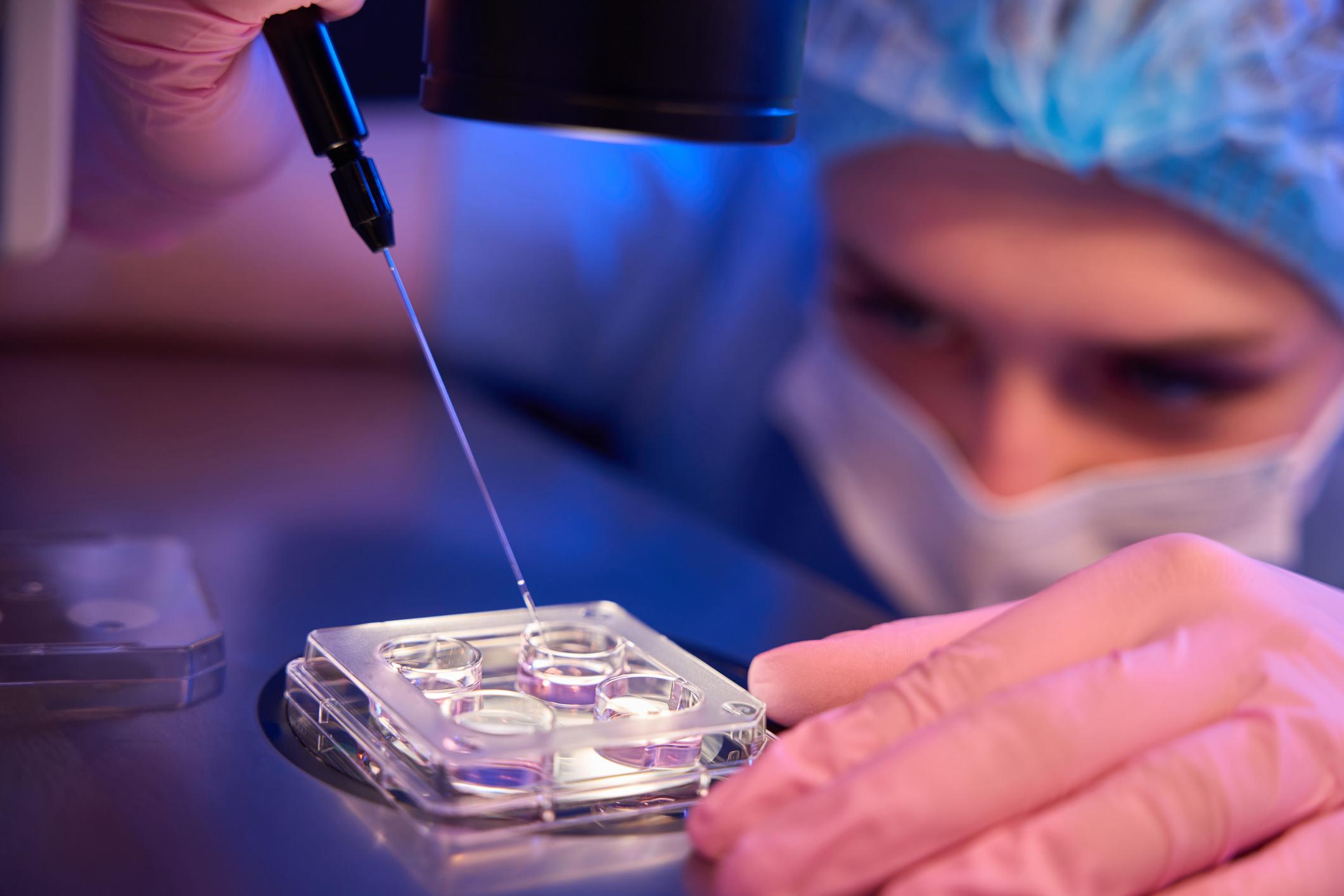
Main image, top, is a stock image of a lab scientist collecting in vitro cultured embryos for biopsy, October 2023. Svitlana Hulko / iStock