A community of ethnic Greek Muslims who were exiled from Greece to Syria in 1897 seek to return to their homeland in Crete. Yet despite presenting the deeds for properties seized by the Greek Orthodox Church 120 years ago, they once again find themselves victims of public resentment and institutional discrimination.“Wherever we go, we are migrants. We go to Turkey, we are not Turkish. We go to Greece, we are not Greek. Nobody accepts us.”
These are the words of Ali Tarzalaki (pictured above), 47, a construction worker who has been living in Cyprus for 25 years. He was visiting his cousin, who owns a butcher's shop in the island’s southern city of Limassol.
For the Muslim community in southern Cyprus, where halal meat is often difficult to come by, this shop is a common meeting point where they can sit down, drink some traditional coffee, and chat.
The customers come from a range of different countries, but most are Syrians. Many of them arrived in Cyprus, just 60 kilometres west of Syria, before the Syrian civil war broke out in 2011. They initially came seeking work with the intention of a short-term stay, but many ended up settling on the island after marrying locals.
“Wherever we go, we are migrants. We go to Turkey, we are not Turkish. We go to Greece, we are not Greek. Nobody accepts us”
But what makes this particular butcher shop unique is that the owner, Saleem Tarzalaki, is from a small town on the Syrian coast called Hamidiyah, as are many of his customers. Like most people from Hamidiyah, both Saleem and his cousin Ali are ethnic Greeks.
In fact, the entire town of Hamidiyah was founded at the end of the 19th century by Ottoman Sultan Abdulhamid II for Greek Muslim refugees. Their grandparents fled from the island of Crete, their native homeland, at the height of a Greco-Turkish war in 1897. The conflict ultimately resulted in Greece’s annexation of Crete and the expulsion of its entire Muslim population due to their perceived loyalty to the defeated Ottoman Empire.
The trauma of the expulsion was widely felt by Ottoman Muslims. Indeed, such was its impact on the Muslim community in Cyprus that academic Niyazi Kizilyurek coined the term “Crete syndrome” to define an underlying phobia buried deep within the Turkish Cypriot collective psyche, which continues to shape their modern political identity even today.
Both Turkish and Greek historians, however, have often made the mistake of referring to the Cretan Muslims as Turks for reasons of self-interest. While the Greek camp sought to label their Cretan brethren as Turks in order to justify their expulsion from Greece, the Turkish camp also labelled them as such to convince Turks in Anatolia of expansionist claims to Crete.
“The trauma of the expulsion was widely...such was its impact on the Muslim community in Cyprus that academic Niyazi Kizilyurek coined the term “Crete syndrome” to define an underlying phobia buried deep within the Turkish Cypriot psyche”
Needless to say, nationalist sentiments were exceptionally high on both sides as Turks and Greeks engaged in numerous territorial disputes throughout the entire 19th century. During this period, being a Christian became synonymous with being Greek, and being a Muslim denoted that one was Turkish.
But for the Tarzalakis, there is no question over their identity. They are Greek Muslims...and no, they are not converts.
Ali and Saleem were born Muslims, as were their parents, their parents’ parents, and many generations of Greek ancestors before them. Their mother tongue has always been the Cretan dialect of Greek, which they still speak today thanks to the efforts of their elders to preserve the language in Hamidiyah. However, explaining this to others has proved difficult.
“They threw us out of Greece because we were Muslim. They said we were Turks. I found relatives in Crete, but they didn’t accept me. They said, ‘you are not Greek’,” Ali explains.
“For the Tarzalakis, there is no question over identity. They are Greek Muslims...and no, they are not converts”
“When we started trying to take back our properties, the Church ordered these ties to be cut...because it had seized our properties for itself. Suddenly they decided that we were Syrians, & not Greek.”
“It does not matter if we are Muslims or Christians. What’s important is that we are from Crete”
Damian Mac Con Uladh, an Irish journalist who briefly worked with refugees on the Greek island of Lesbos, recalls coming in contact with a young Syrian man who surprised everyone when he spoke in fluent Greek. He told aid workers he was in fact an ethnic Greek from Syria and was trying to reach Crete, where he said his townspeople were waiting for him. Sadly, the journalist says he later lost contact with the young man.
Ahmed Tarzalakis, 42, and his wife Jasmin, 33, stand on the balcony of their apartment with their young daughter Fatima in the city of Chania, north-west Crete. Ahmed, his wife Jasmin and their four young children, Reem, Belal, Mustafa and Fatima, are asylum-seekers in Greece, originally from Al-Hamidiyah, Syria. The Mediterranean coastal town on the border with Lebanon was established as an enclave for Muslim refugees from Crete about 120 years ago. Ahmed grew up speaking Greek and he can neither read nor write Arabic. The family fled to Greece to escape the approaching conflict in Syria. They made their way by boat to the island of Lesvos and then on to the Cretan city of Chania, setting foot in a land Ahmed only knew from stories and songs shared by the elders in his family. Due to problems with his health, the family have been moved into an apartment and provided with monthly cash assistance under the European Union-funded Emergency Support To Integration and Accommodation (ESTIA) programme, which is run by UNHCR in cooperation with municipalities and NGOs around Greece. In Crete, the programme is implemented by the Heraklion Development Agency.
One refugee from Hamidiyah, however, was tracked down. Ahmed Tarzalakis managed to return to the land of his grandparents after crossing the choppy Aegean waters from Turkey along with his wife and four children. They were fortunate enough to be accepted into a partnership programme run by Chania local Iraklis Drakakis, who aims to help Syrian refugees find homes in the city, with their rent being covered by the UN High Commissioner for Refugees (UNHCR).
Unlike most Syrian refugees seeking better lives in wealthier northern and central European countries, Ahmed prefers to stay in Crete. "For years we said we were Cretans. My father always told me until he died that he wanted to see Crete," he told Haniotika News in September 2017. “Now I have brought my children here.”"We are Cretans,” Ahmed says. “It does not matter if we are Muslims or Christians. What’s important is that we are from Crete.”
FOOTNOTE: I’d like to thank long-time friend and colleague Ioanna Sakoufaki for helping me with this article, which I dedicate to the memory my late friend Halla Barakat, a young Syrian-American journalist who paid the ultimate price for speaking out against war crimes in Syria. May she rest in eternal peace.


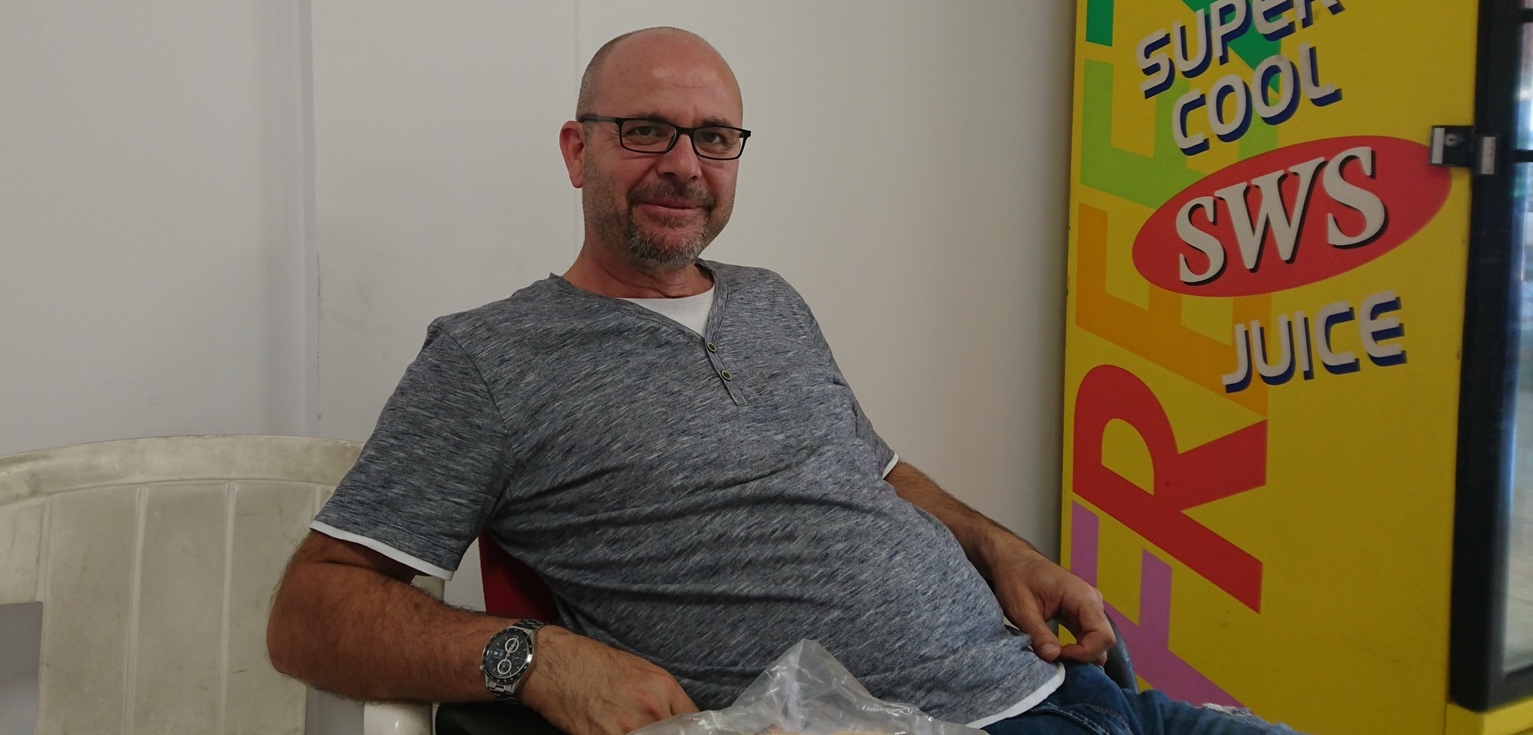 Greek Muslim Hassan Amin Ventoragis whose family is originally from Crete, but relocated to Limassol via Hamidiyah, Syria. Photo © Ertan Karpazli
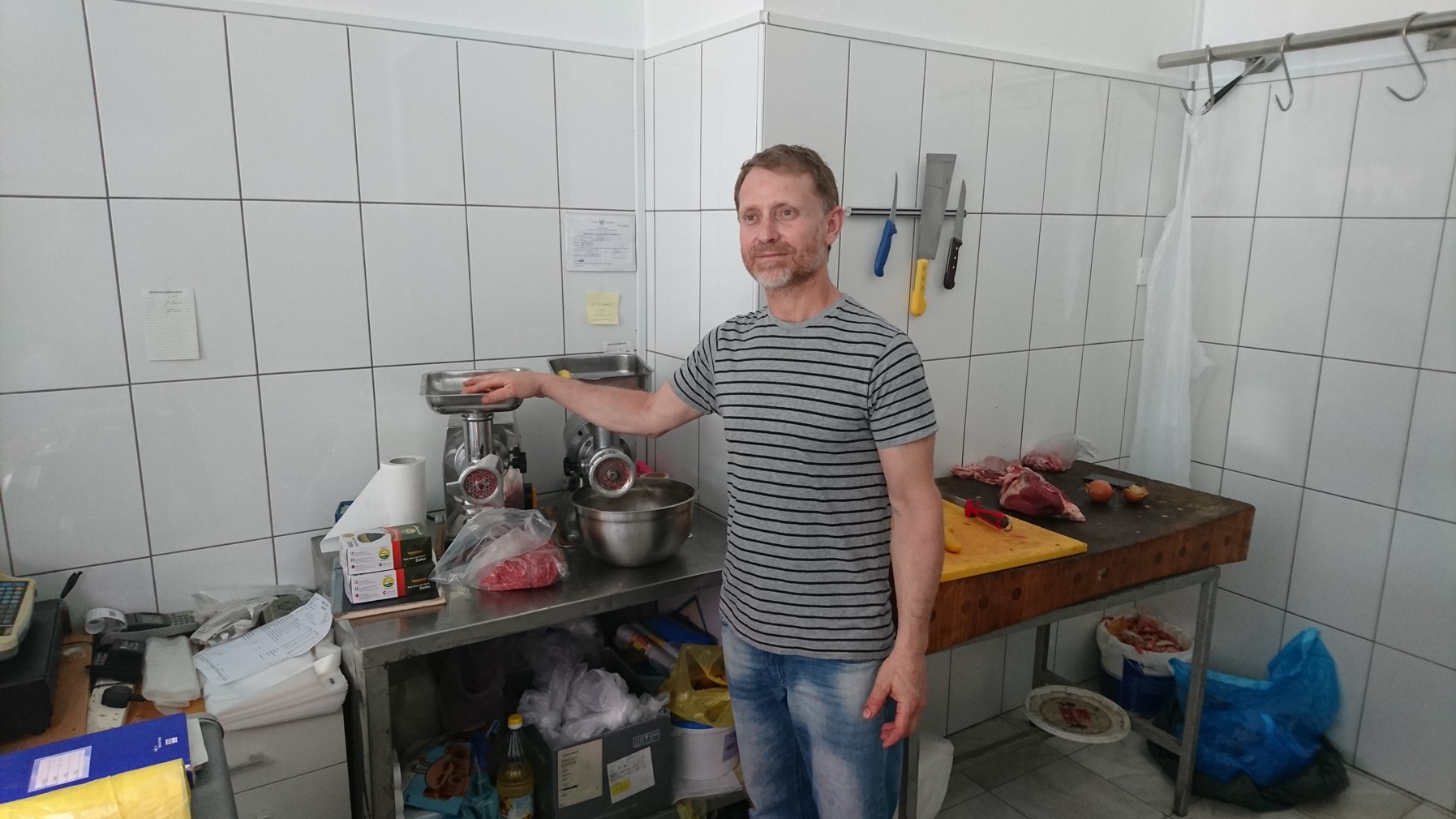 Butcher Saleem Tarzalaki serves halal meat to fellow Greek Muslims in Limassol. Photo © Ertan Karpazli
 Ahmed Tarzalakis, 42, and his wife Jasmin, 33, stand on the balcony of their apartment with their young daughter Fatima in the city of Chania, north-west Crete. Ahmed, his wife Jasmin and their four young children, Reem, Belal, Mustafa and Fatima, are asylum-seekers in Greece, originally from Al-Hamidiyah, Syria. The Mediterranean coastal town on the border with Lebanon was established as an enclave for Muslim refugees from Crete about 120 years ago. Ahmed grew up speaking Greek and he can neither read nor write Arabic. The family fled to Greece to escape the approaching conflict in Syria. They made their way by boat to the island of Lesvos and then on to the Cretan city of Chania, setting foot in a land Ahmed only knew from stories and songs shared by the elders in his family. Due to problems with his health, the family have been moved into an apartment and provided with monthly cash assistance under the European Union-funded Emergency Support To Integration and Accommodation (ESTIA) programme, which is run by UNHCR in cooperation with municipalities and NGOs around Greece. In Crete, the programme is implemented by the Heraklion Development Agency.