Last weekend, fighting erupted between Armenia and Azerbaijan. The Azerbaijan army went on the offensive after the country’s Tovuz region came under fire from Armenian forces. The incident follows months of tension and small-scale skirmishes between the two sides.
This simmering conflict in the Caucasus region centres on the Nagorno-Karabakh region, which is internationally recognised as part of Azerbaijan, but which has been under occupation by Armenia since 1991.
A war broke out between the two former Soviet Union republics in the late 80s and ran until a ceasefire was called in 1994. By that time tens of thousands had been killed and over a million people displaced.
The United Nations Security Council (UNSC) has repeatedly ordered Yerevan to withdraw from Nagorno-Karabakh, but the Armenian government refuses to comply.
In 1992, the OSCE Minsk Group was formed to resolve the dispute, but it too has been ineffective. The organisation is led by France, USA and Russia, which Baku accuses of bias due to their large Armenian diasporas.
Soldiers shake hands in front of a Turkish and an Azerbaijani flag during joint exercises between Turkish, Azerbaijani forces in Perekeshkul, Azerbaijan on August 13, 2020
Embed from Getty Images
In 2015, Azay Guliyev, an Azerbaijani member of parliament, proposed that permanent group members Turkey and Germany are upgraded as co-chairs of the Minsk Group to inject much-needed balance, but that too has been resisted.
Turkey remains firmly allied to its Turkic neighbour. On Friday, President Recep Tayyip Erdoğan reiterated his support for Baku and its current military operation.
“The brotherly state of Azerbaijan has started a great operation both to defend its own territories and to liberate the occupied Karabakh.
“Turkey stands with and will continue to stand with friendly and brotherly Azerbaijan with all our means and all our heart,” the Turkish president said.


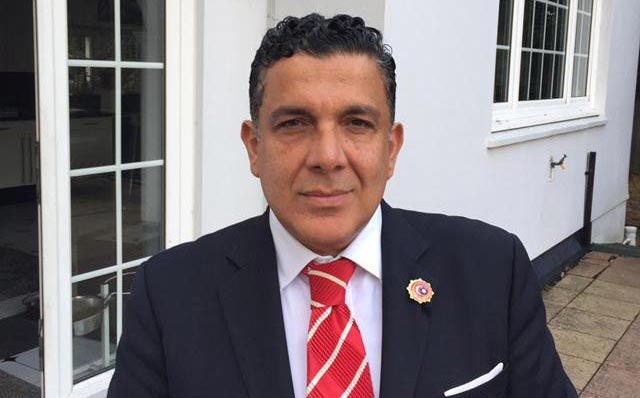 Businessman Nural Ezel. Photo © Olay Gazetesi