Last month, the leading names and brands in the world of modest fashion came together to showcase their new lines during Modanisa London Modest Fashion Week, held in Olympia, West London, as part of the Muslim Lifestyle Show.
Under the banner “embrace the grace”, 26 designers presented their collections on the catwalk. Among them were Turkey's Refka, Mayovera, and Selma Sarı, British labels Pillar, Saiqa Majeed, and Farrah Naaz, the USA's Fllumae, Malaysia's Nourish Kareem and Aidijuma, and Helena Latifi of Norway.
The catwalk shows had sold out weeks ago. Each one was about 30-minutes long and featured multiple designers; those attending were not left disappointed. The glitz and glamour of the Modanisa-sponsored catwalks were on a par with those staged by the more mainstream London Fashion Week. Professional models were dressed, styled and sent down the runway, watched by a mainly female audience of all ages, some conservatively dressed, others less so, but all equally enthralled by the gorgeous spectacle on display.
Opening the event was Halima Aden (pictured below) – the world's first hijab-wearing model – who stepped on to the runway wearing a peach blush abiye (evening dress) and hijab by Minel Aşk (Turkey). The Somali-American recently appeared in fashion shows for Kanye West and Max Mara, and as the rising star of modest fashion she was mobbed by fans after her London catwalks eager to talk to her and have their pictures taken together.
What is modest fashion?
For those new to modest fashion, the diversity of styles was a real eye-opener. The designers adhere to Islamic dress codes, which require men and women to dress and behave modestly when in the company of unrelated members of the opposite sex.
As Kerim Türe, CEO and founder of modest fashion giant Modanisa, said this sector is all about giving “more choice to women who prefer to wear modest fashion, allowing them to look elegant without compromising their beliefs.”
For women who choose to cover up, this means wearing clothes that do not reveal their body shapes. Essentially their clothes should cover their arms and body down to their ankles. Many will also don the hijab (literally meaning a veil) to conceal their hair, commonly regarded as an integral component of a woman’s outfit as laid down in Koranic text.
Hijab supermodel Halima Aden opened Modanisa London Modest Fashion Week walking the runway for Minel Aşk. Photo Rooful Ali
Some Muslims view the Islamic scripture differently, believing it also requires the covering of a woman’s face: “And say to the believing women that they should lower their gaze and guard their modesty: that they should not display their beauty and ornaments, except what (ordinarily) appear thereof.” (24:31)
The script is vague enough to allow a variety of interpretations on what constitutes women ‘guarding their modesty’. Not surprisingly, several modest fashion designers at Olympia took a more liberal approach and skipped the hijab altogether.
"The shows illustrated how diverse modest fashion style is"
As Franka Soeria, a co-creator of Modest Fashion Week, said: “The shows illustrated how diverse modest fashion style is. Some designers were heavily defined by cultural influences, while others fused East-West elements, producing modern daywear and glamorous evening dresses that adhere to Islamic principles, yet appeal far beyond.”
And of course it’s not just Muslims, but women from other faiths and those of no faith who like to dress more conservatively that has resulted in a boom in modest fashion, now globally worth £300bn. In fact, there are many pieces on show at Modanisa London Modest Fashion Week (MLMFW) that would appeal to any fashion lover.



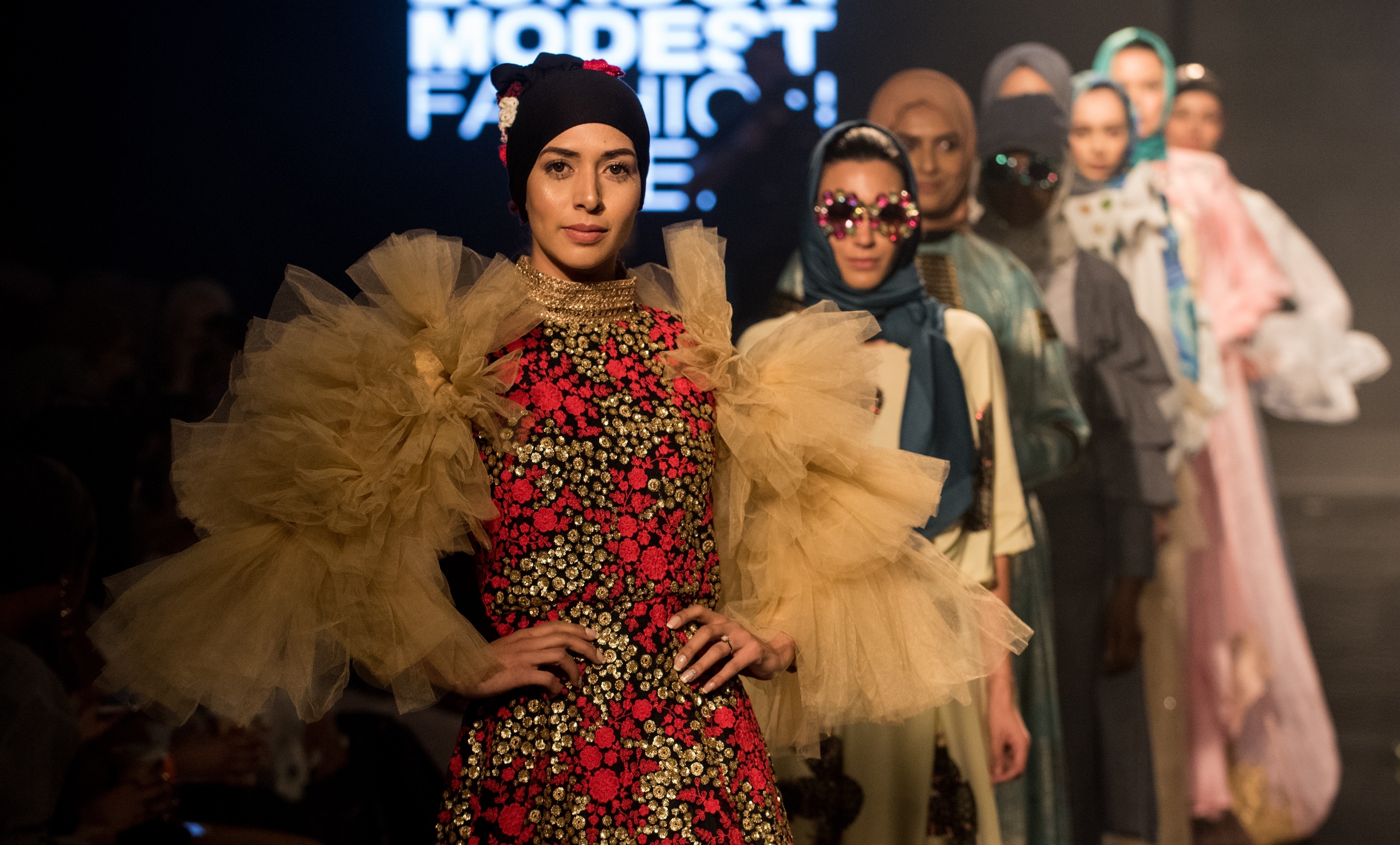
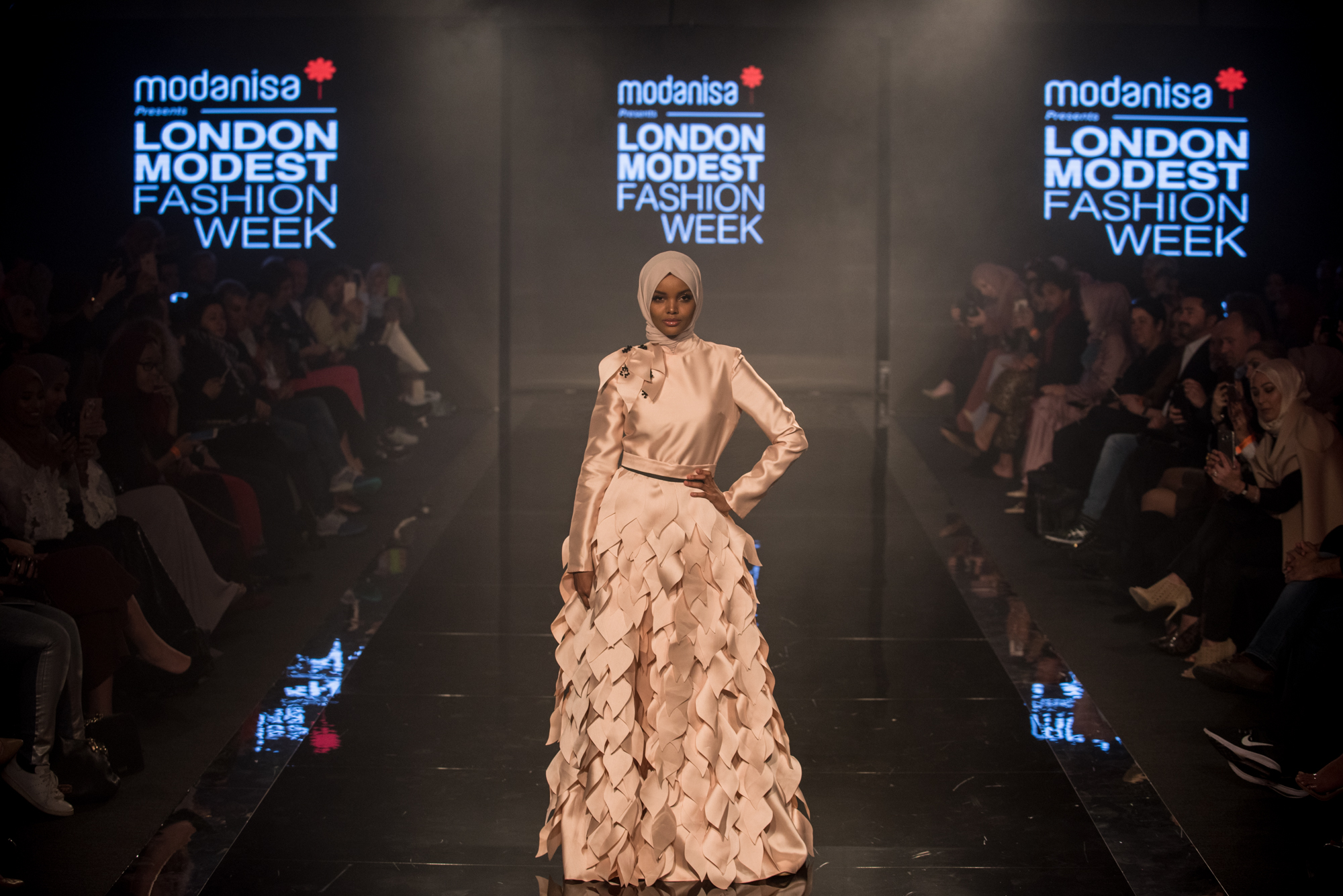 Hijab supermodel Halima Aden opened Modanisa London Modest Fashion Week walking the runway for Minel Aşk. Photo Rooful Ali
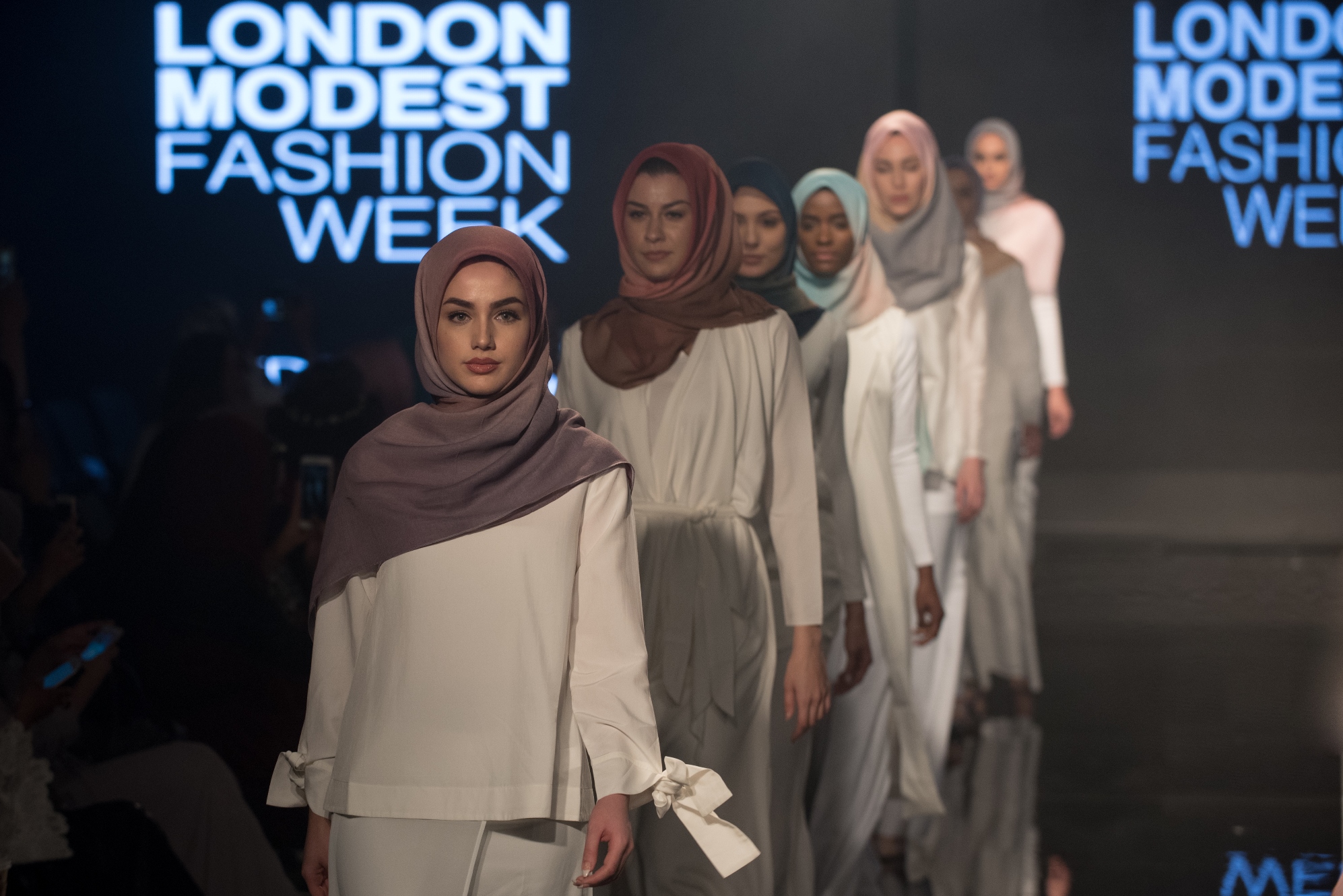 Aidijuma's Spring Summer hijab collection ft at Modanisa London Modest Fashion Week, Olympia,15 April 17. Photo © Rooful Ali
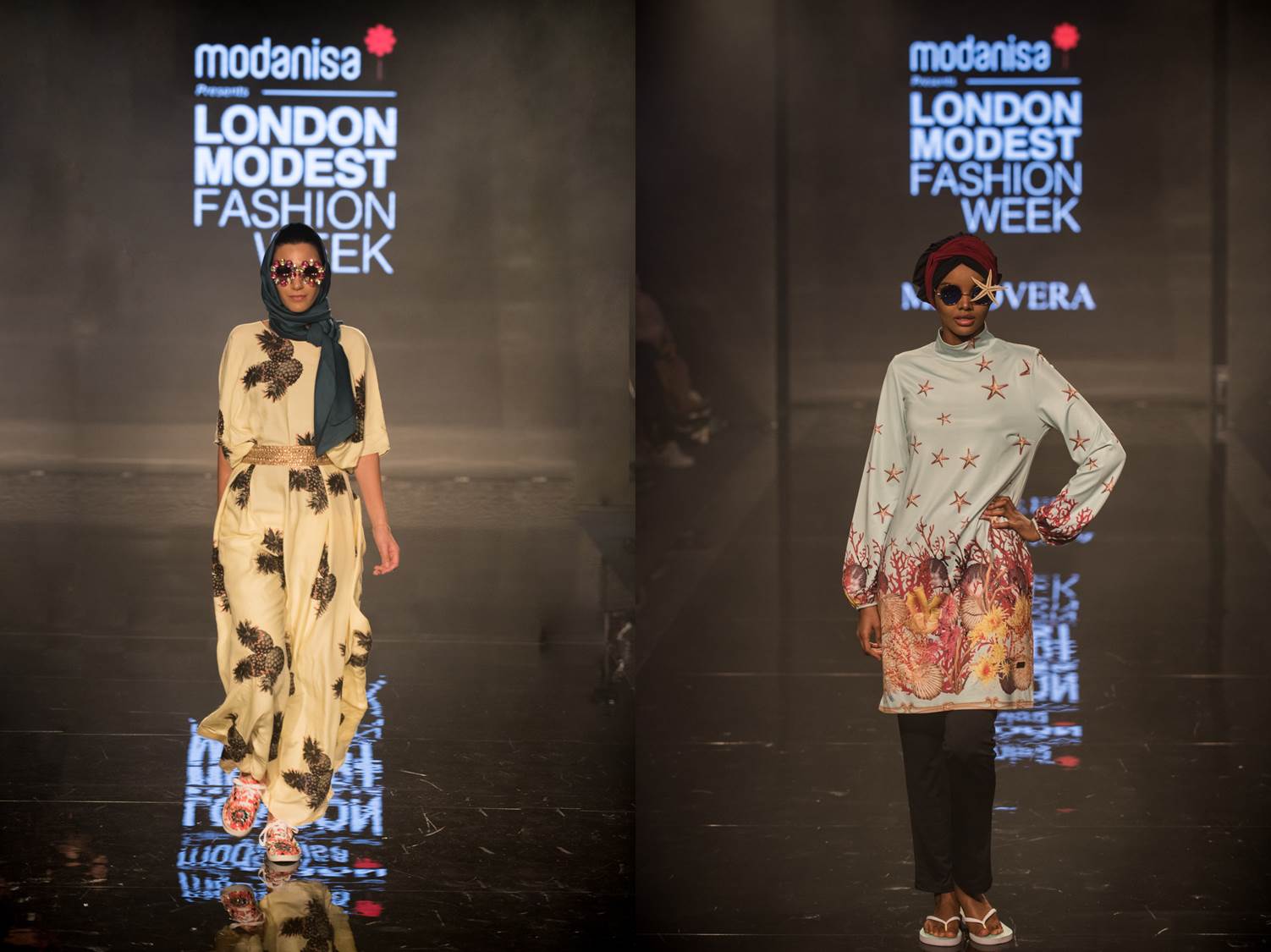 Summer shades on the catwalk: Flluame's jumpsuit and Mayovera's Burkin at Modanisa London Modest Fashion Week, Olympia, 15 April 2017. Photos © Rooful Ali
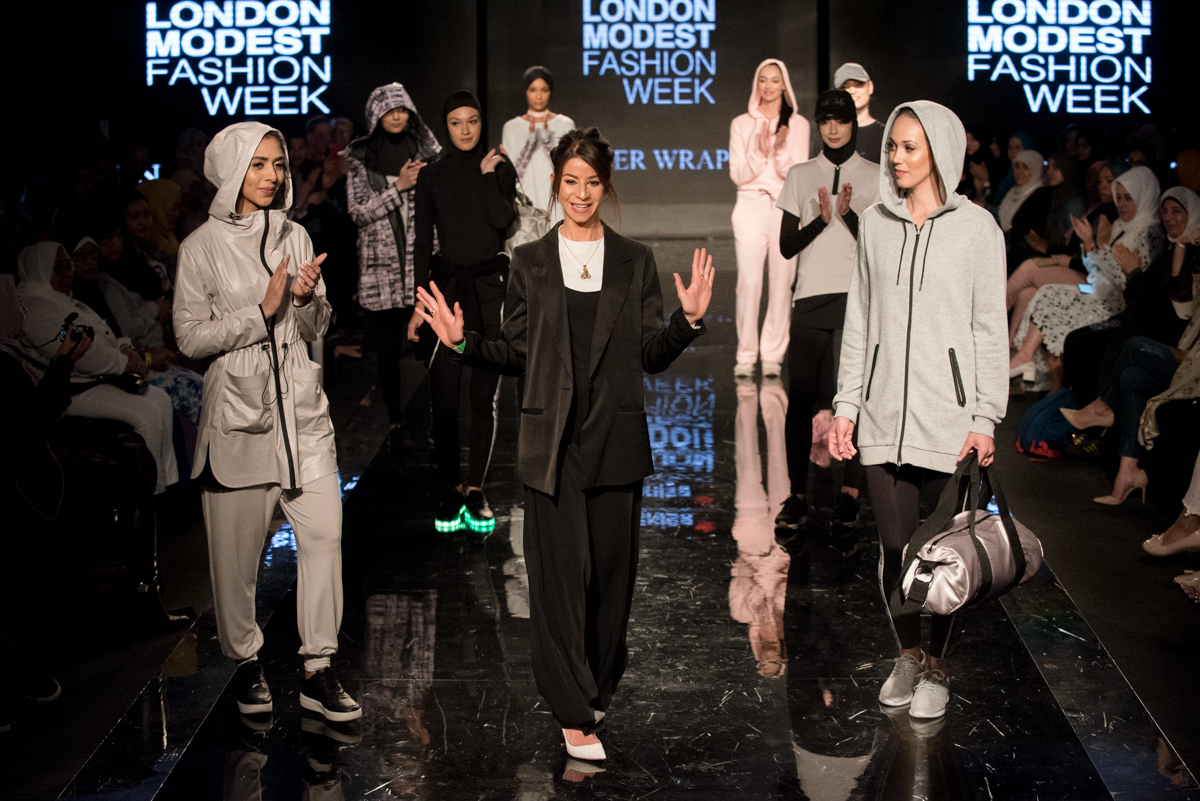 British designer Yasmin Sobeih debuts her new Under-rapt sportswear label on the catwalk. Photo © Rooful Ali
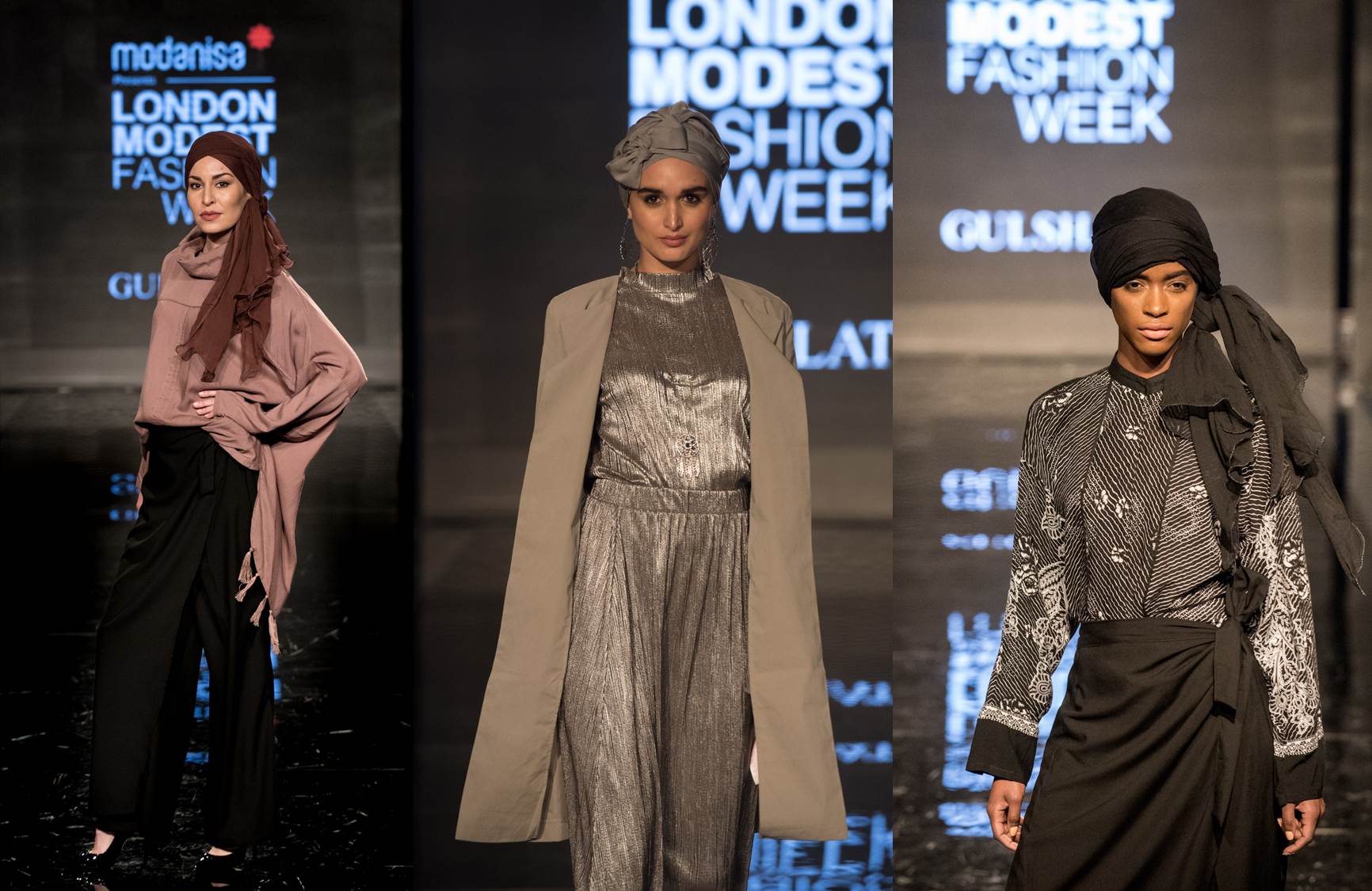 Street chic by Gulshaan (right & lef) & Helen Latifi (middle) at Modanisa LMFW, 15 Apr 17. Photo © Rooful Ali
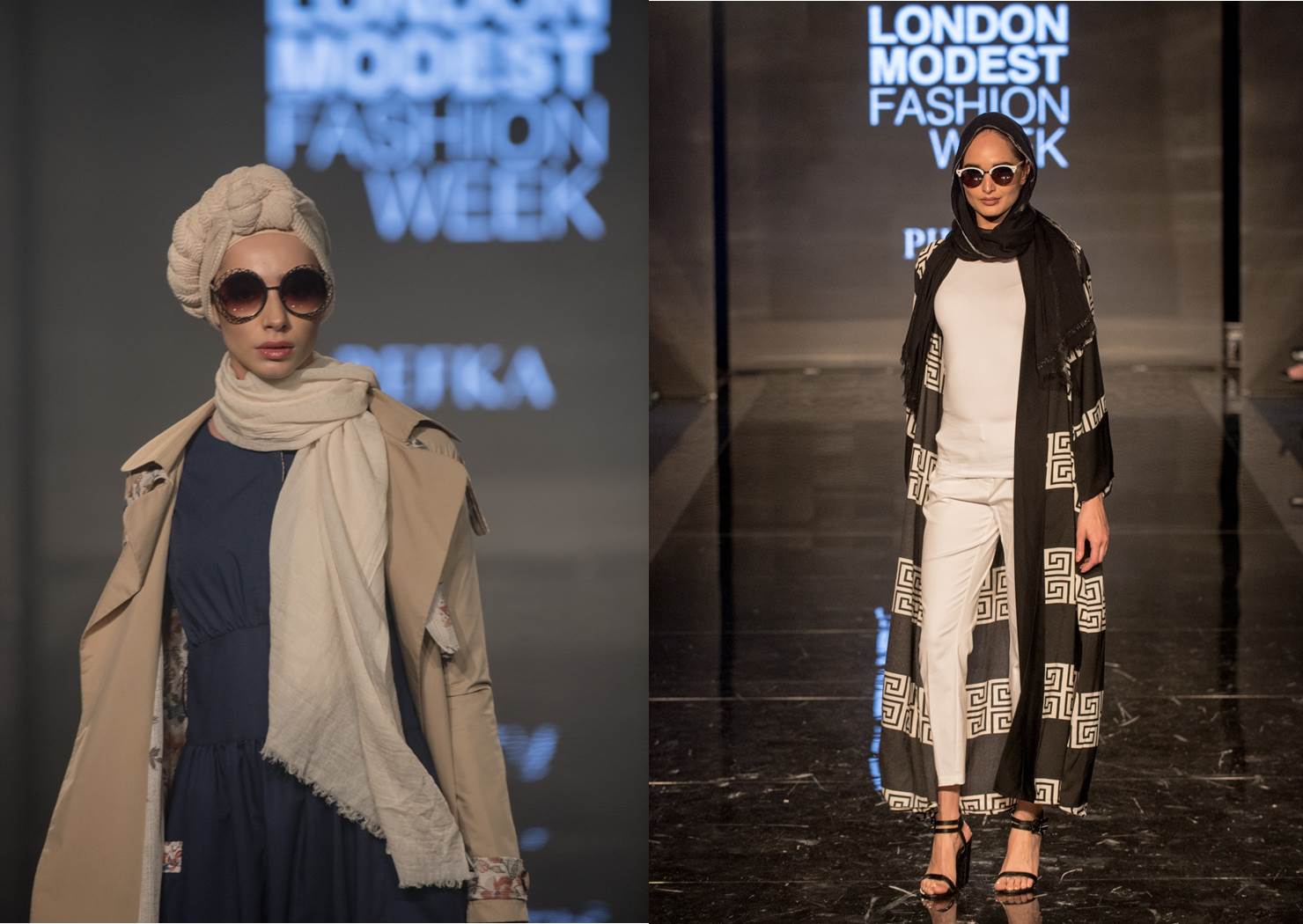 Street chic for women who want to blend in without compromising on their beliefs: turban, coat & blue dress by Refka, and Pillar's overcoat & headscarf, on the catwalk at Modanisa London Modest Fashion Week, 15 April 2017. Photo © Rooful Ali
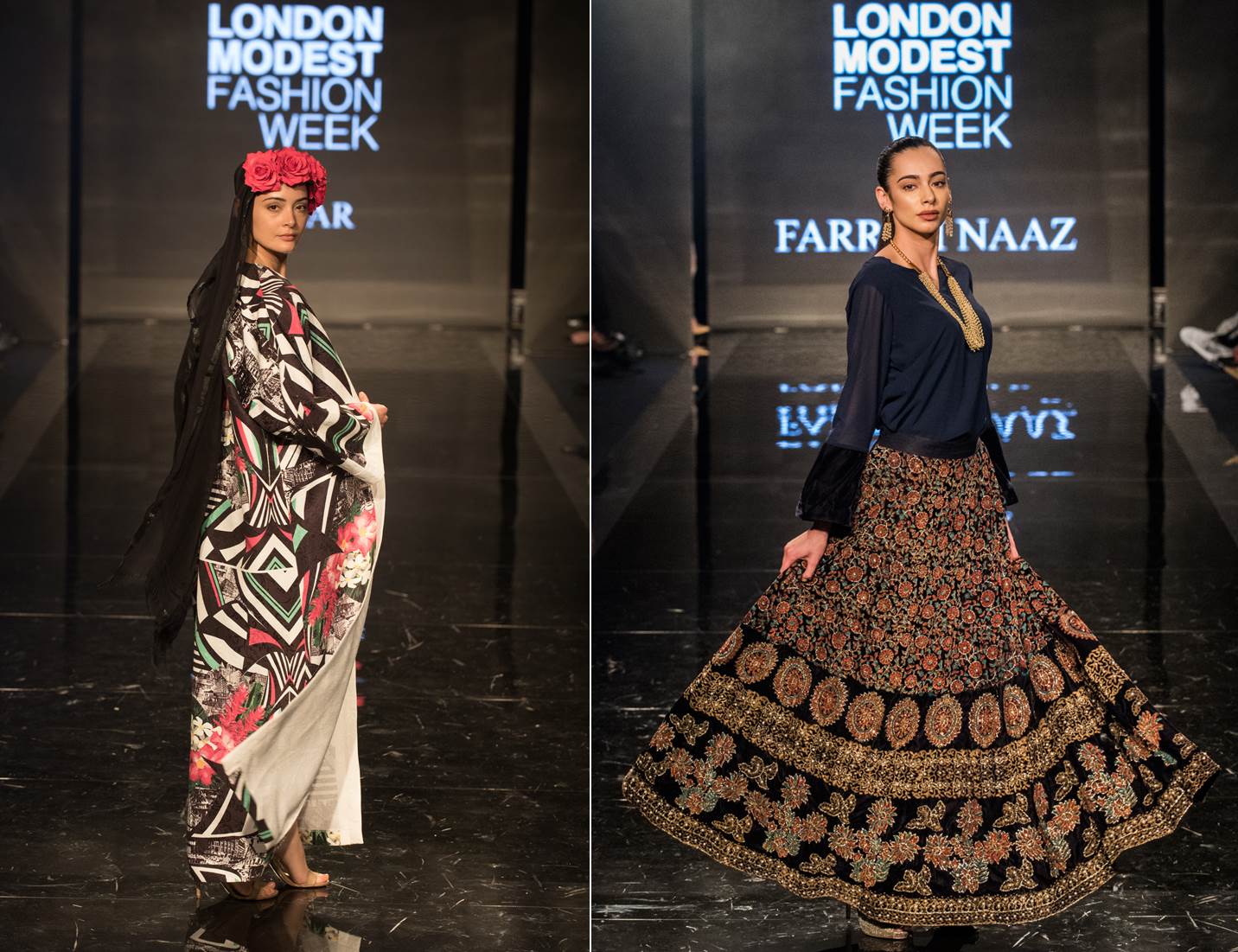 Bold prints: overcoat by Pillar, & skirt by Farrah Naaz, on the catwalk at Modanisa London Modest Fashion Week, 15-16 April 2017. Photos © Rooful Ali
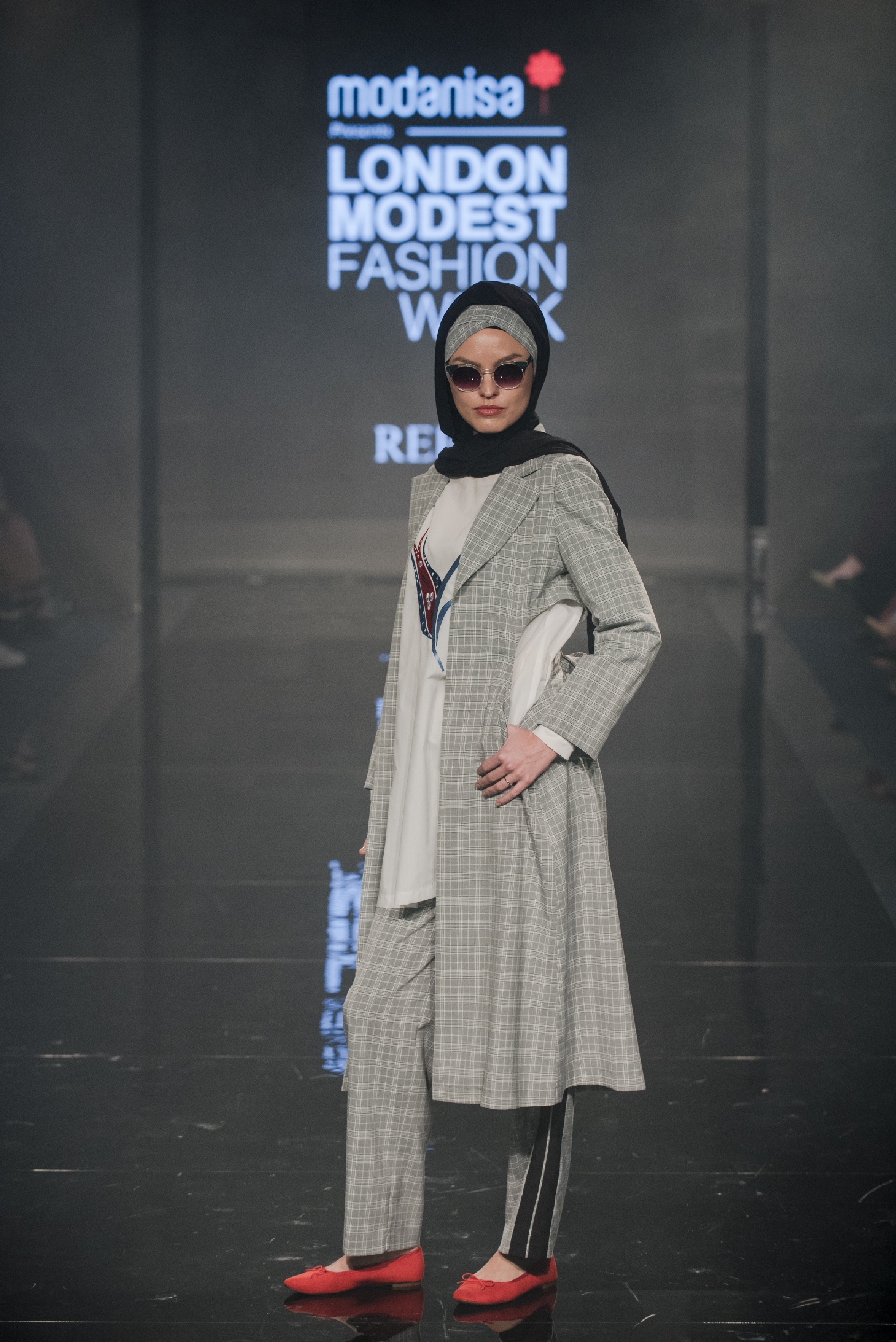 Cool checks by Refka, Modanisa London Modest Fashion Show, 15 Apr 17. Photo © Rooful Ali
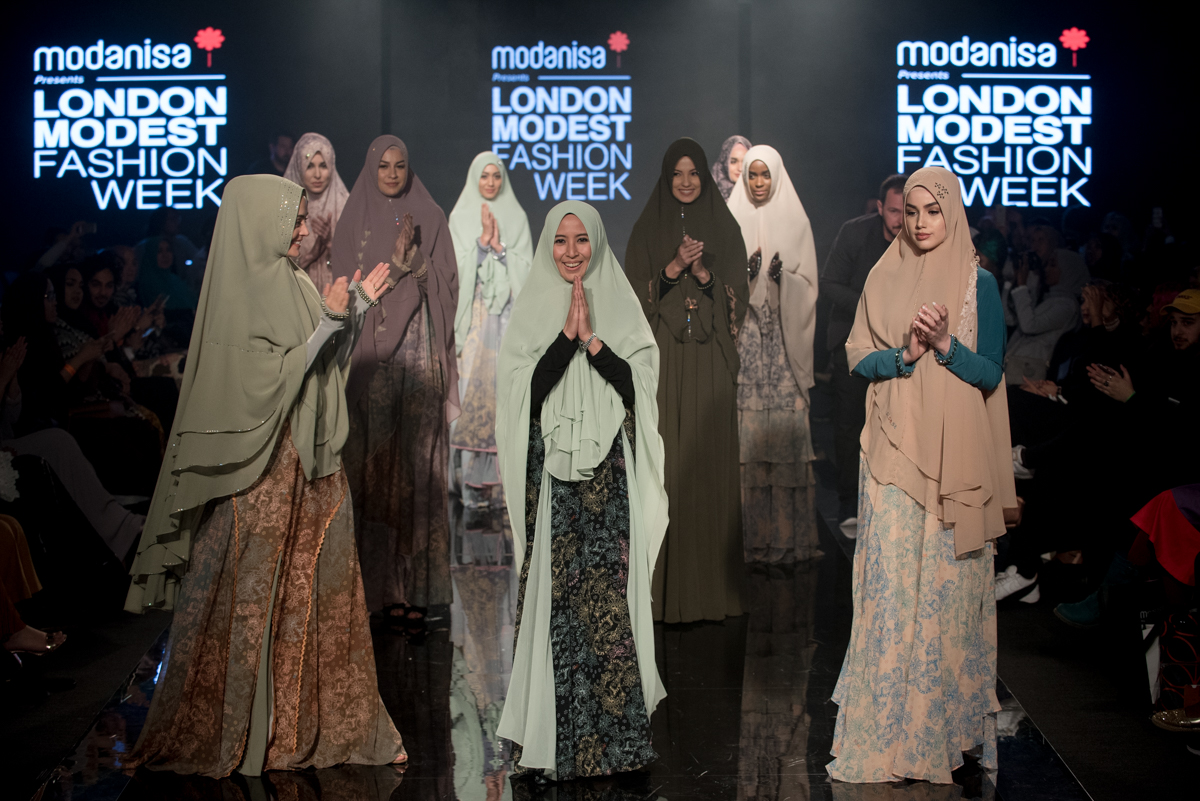 Indonesia's Si Se Sa showcases her pioneering syar'i style hijab for conservative Muslim ladies. Photo © Rooful Ali
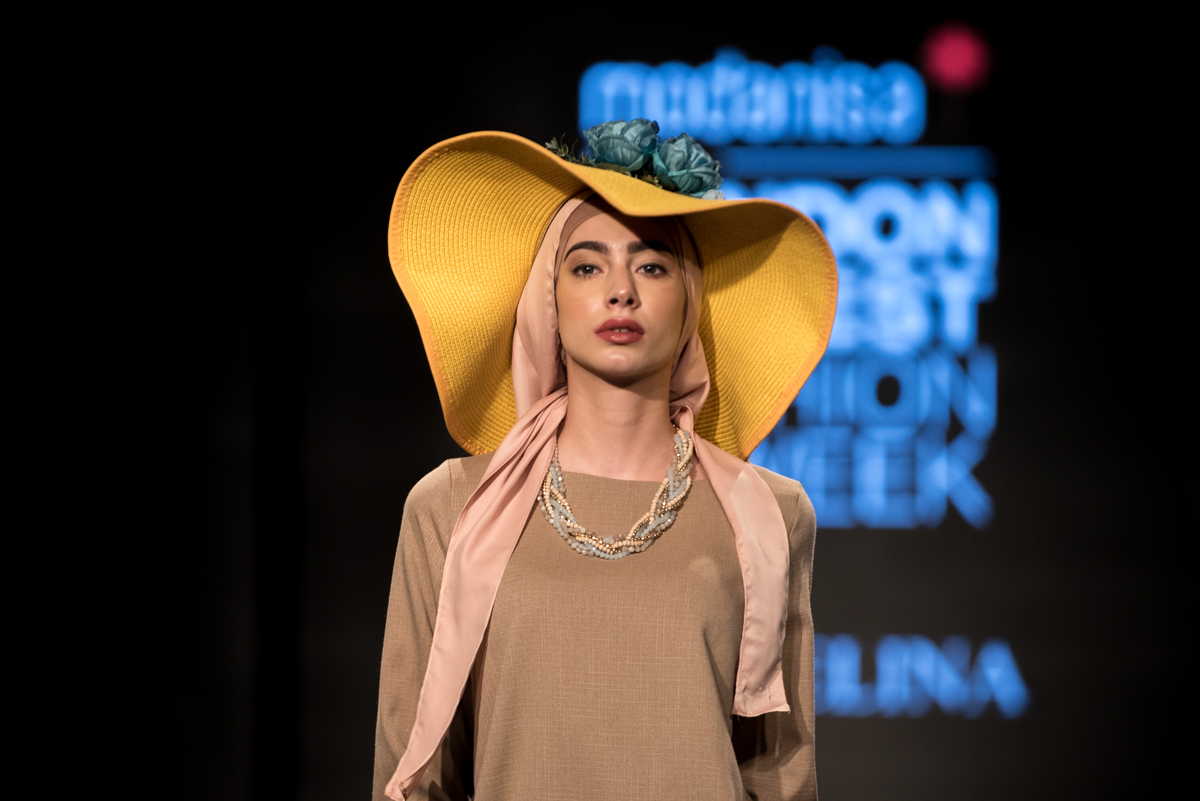 Head turners: inspiring hijabwear by Darrelina, ft at Modanisa London Modest Fashion Week, Olympia, 15 Apr 17. Photo © Rooful Ali
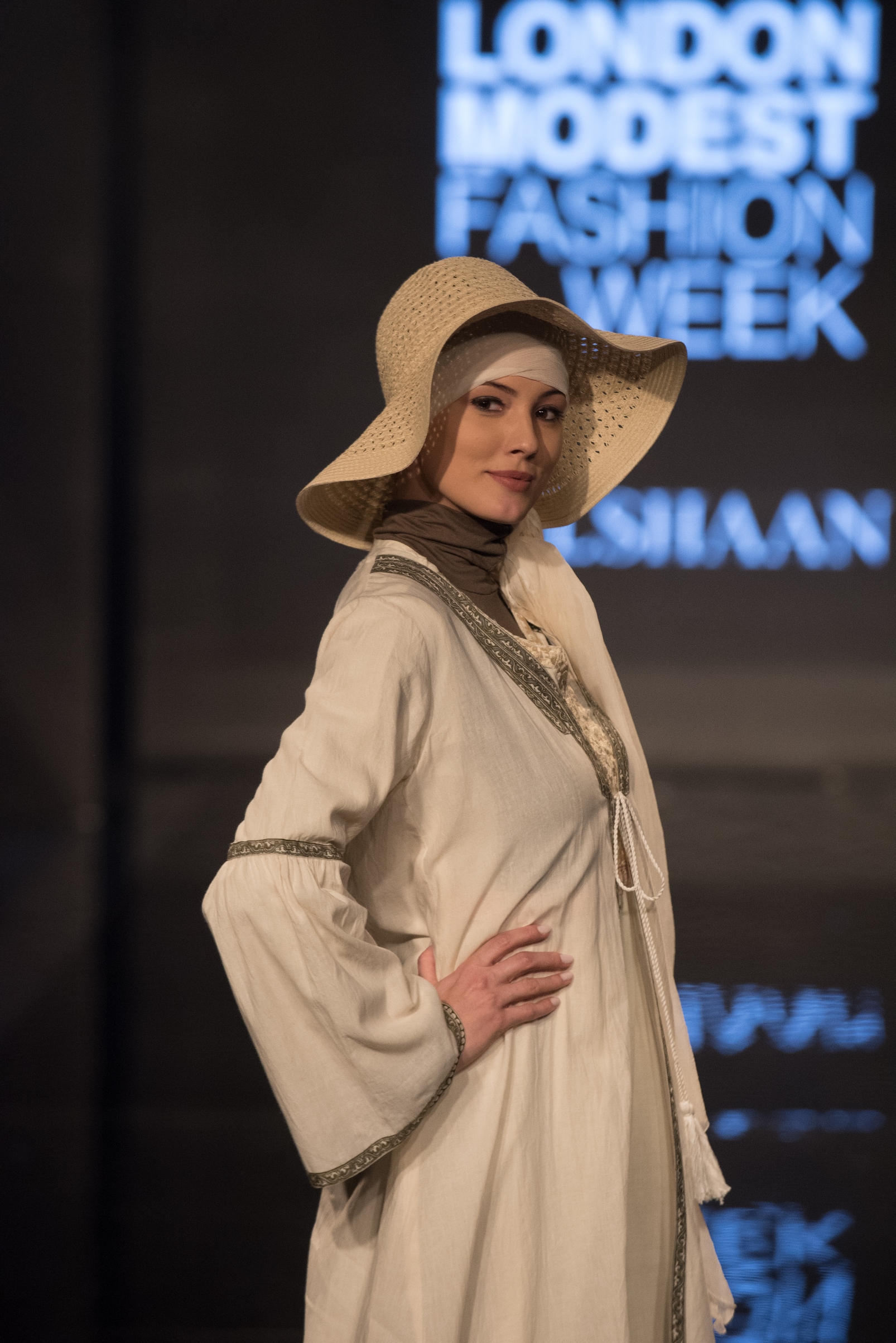 Gulshaan's bell sleeved tunic is perfect for summer. Modanisa London Modest Fashion Week, Olympia, 16 Apr 17. Photo © Rooful Ali
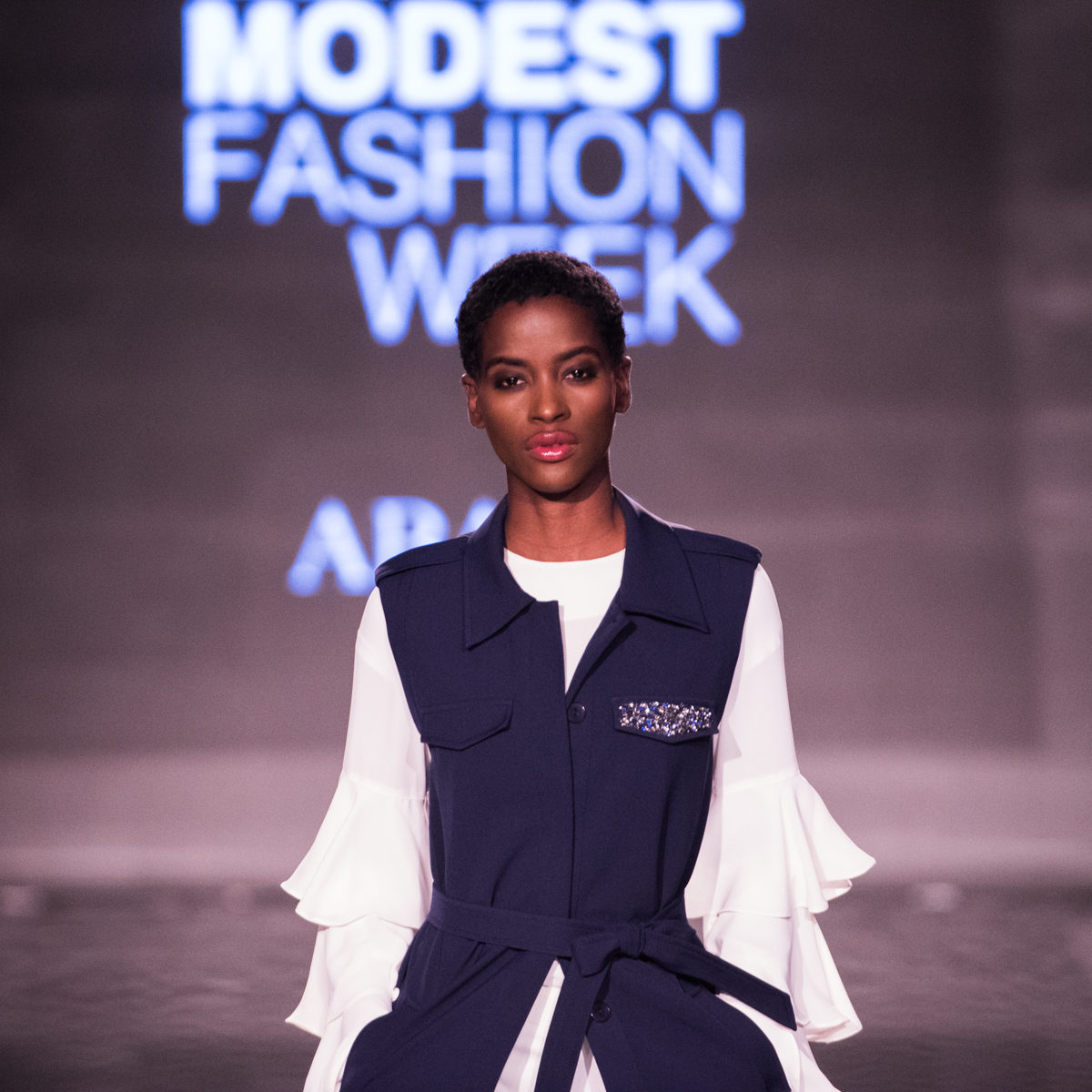 Ruffles like these on a blouse by Turkish designer Abacı were big on the catwalk at Modanisa London Modest Fashion Week, 15 Apr 17. Photo © Rooful Ali
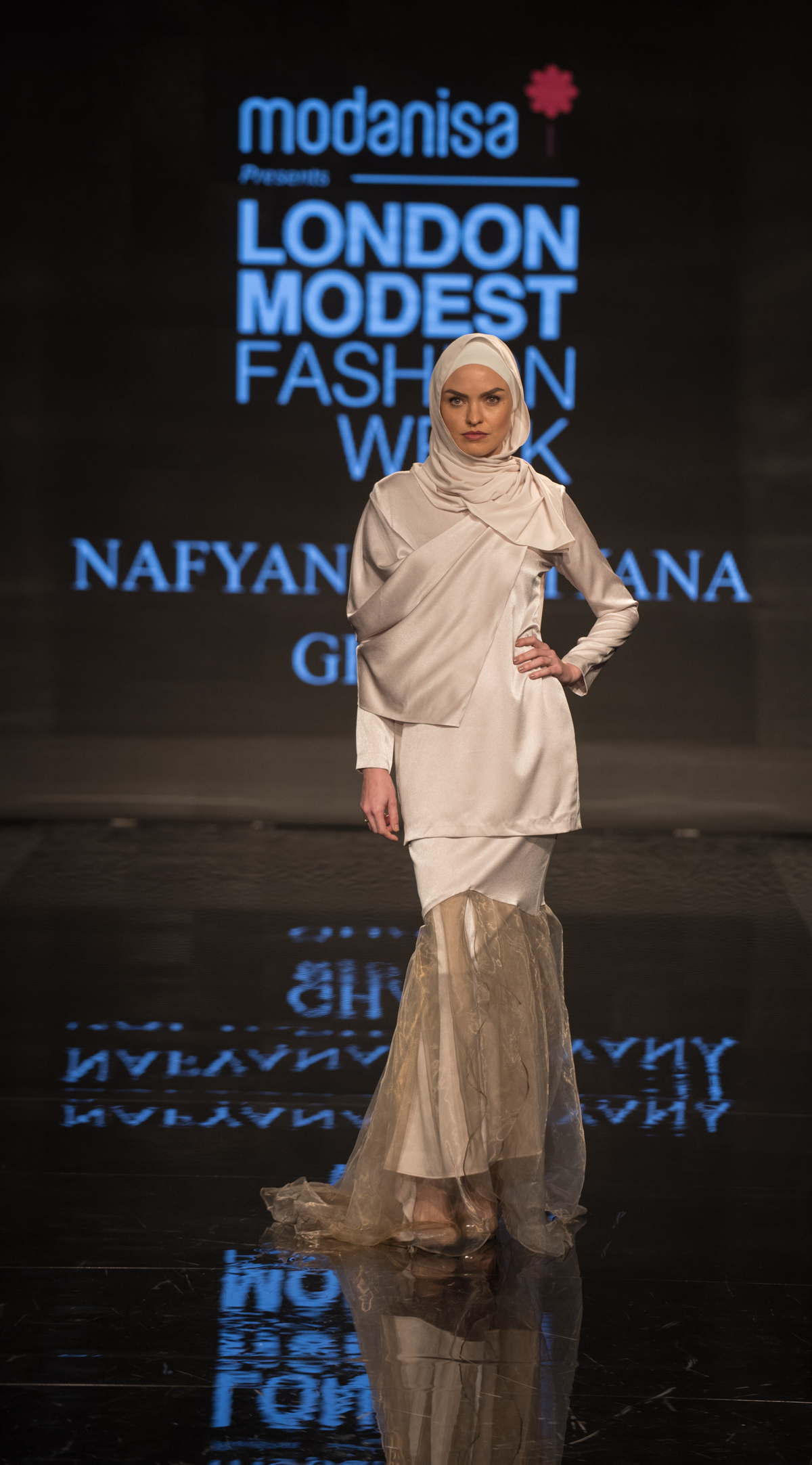 Luxurious day wear - Nafyana by Liyana Ghaus at Modanisa London Modest Fashion Week, 16 Apr 17. Photo © Rooful Ali
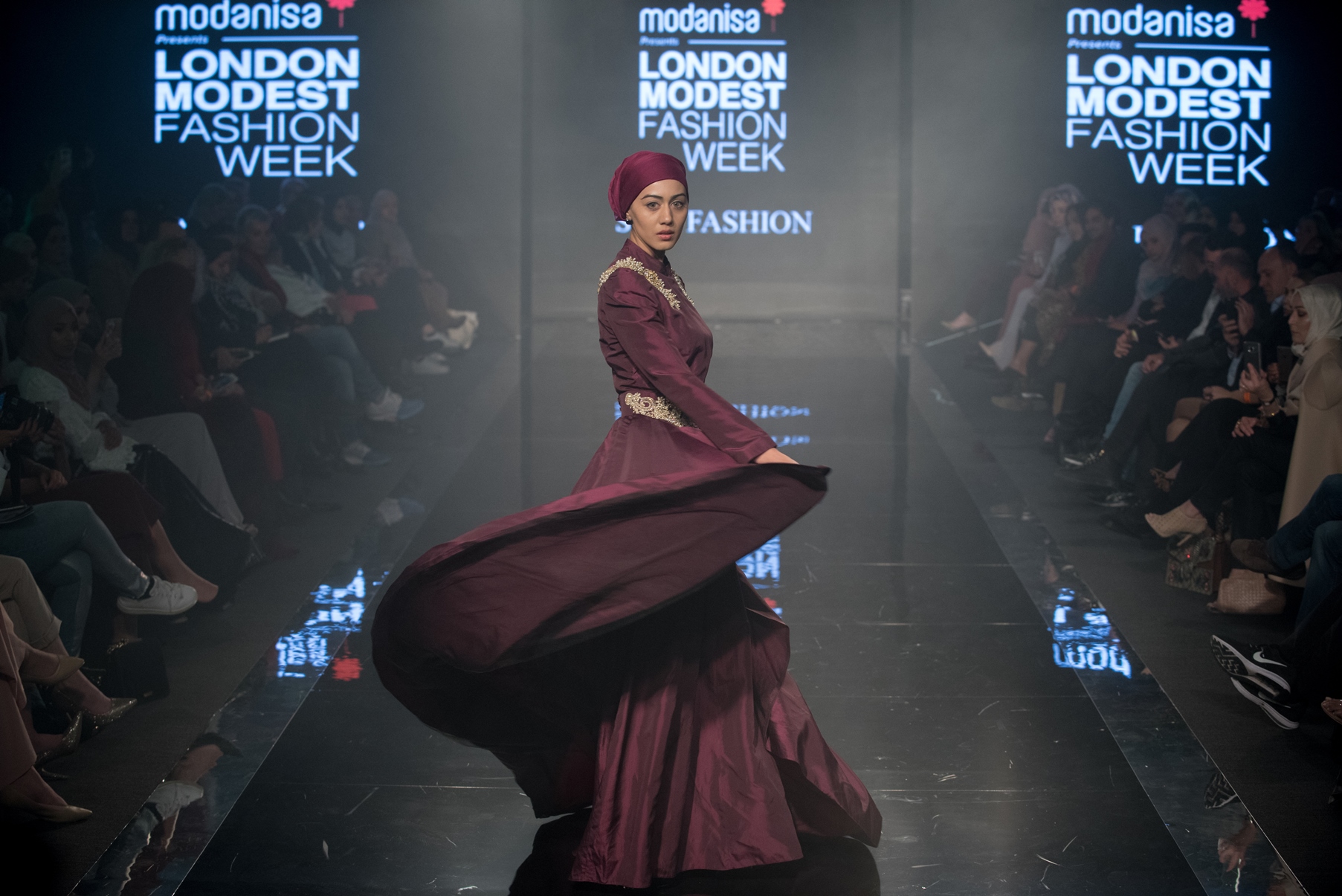 Som Fashion one of several designers showcasing elegant evening dresses at Modanisa London Modest Fashion Week, 16 Apr 17. Photo © Rooful Ali