The Greek Cypriot tourism sector will see one of its biggest markets evaporate this summer following its government’s decision to impose economic sanctions on Russia for invading Ukraine, with Turkiye set to benefit instead.
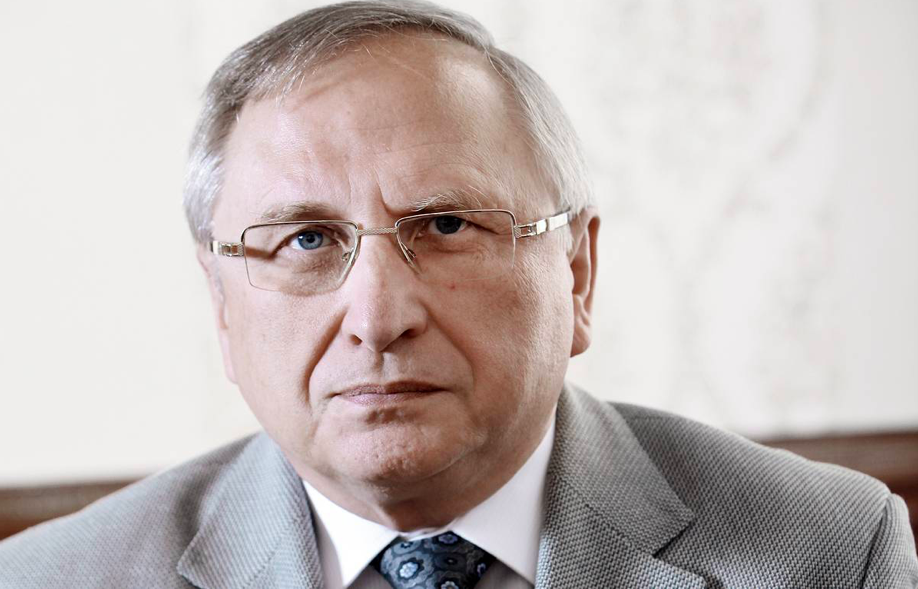
Stanislav Osadchiy, Russia’s Ambassador to Cyprus, told a local media outlet that Greek Cypriots had ‘shot themselves in the foot’ by banning Russian airlines:
“How will [South] Cyprus get Russian tourists? Russian tourists will not come. Where will these tourists go? They’ll go to Turkiye, do you want that? They’ll spend money there.”
A member of the European Union, Greek Cyprus has implemented a raft of sanctions against Russia in line with foreign policy decisions taken by the EU bloc for its devastating military action in Ukraine.
The EU’s sanctions include closing European airspace to Russian aircraft, kicking Russian banks out of the SWIFT international banking system, and freezing the assets of key Russian officials and oligarchs.
The developments prompted a firm response from Ambassador Osadchiy. Responding to questions from Greek Cypriot daily Politis newspaper about the impact of the European sanctions, the fluent Greek speaking 71-year-old diplomat said:
“If you ask me personally, [economic sanctions] do not worry us. Unfortunately, I think Europeans are shooting themselves in the foot. Where will they find natural gas, oil, wheat? How will [South] Cyprus get Russian tourists?
“Russian tourists will not come. Where will these tourists go? They’ll go to Turkey, do you want that? They’ll spend money there. Summer is coming. You have shut down Cyprus’ airspace? You have shot yourselves in the foot.”
The long-standing Russian Ambassador to Cyprus has been in his current post since 2013 and overseen strong relations between his country and Greek Cypriots. Prior to that he was Ambassador to Austria, and has also served as Russian Consul-General in Hamburg, Germany, and Istanbul, Turkiye, and as a junior diplomat in the embassies of the USSR in Cyprus (1973-1979) and Greece (1982-1987).
Russian sanctions will impact South Cyprus' economy
Embed from Getty Images
In 2019 – the last full year of tourism before the coronavirus pandemic took hold – the island received a total of 3.97 million tourists. Of these, some 782,000 visitors to South Cyprus, around one in five, were Russians.
South Cyprus’ financial and service sectors are also set to be severely impacted by European sanctions on Russia. The South’s economy is heavily reliant on Foreign Direct Investment (FDI).
According to a report in the Cyprus Mail, in 2020 incoming FDI stock totalled €388.814 billion, of which €101.962 billion, or 26%, came from Russia. In the same period, outdoing FDI stock reached €399.313 billion, with €134.422 billion, or 34%, going to Russia.
Embed from Getty Images
One Cypriot Russian bank trying to mitigate the impact of the economic sanctions is RCB. Formerly known as the Russian Commercial Bank, one of RBC’s big shareholders, the Russian state-owned VTB Bank, decided to transfer ownership to Cypriot businesses immediately after VTB was placed on the West’s list of sanctioned banks.
“RCB Bank announces a change in its shareholding structure,” RCB said in a statement on its website. “On February 24th 2022, a 46,29% stake in the share capital of RCB Bank held by VTB Bank (PJSC) was acquired by the other current, Cypriot shareholders of the Bank who represent the management,” the statement continued.
According to a report by OCCRP (Organised Crime and Corruption Report Project), the other shareholders in RCB are Crendaro Investment Limited, which held 49.9% of the bank’s shares before the VTB transfer, and Mitarva Limited, which had 3.81%.
The transfer deal has yet to be approved by the European Central Bank and the Central Bank of Cyprus.



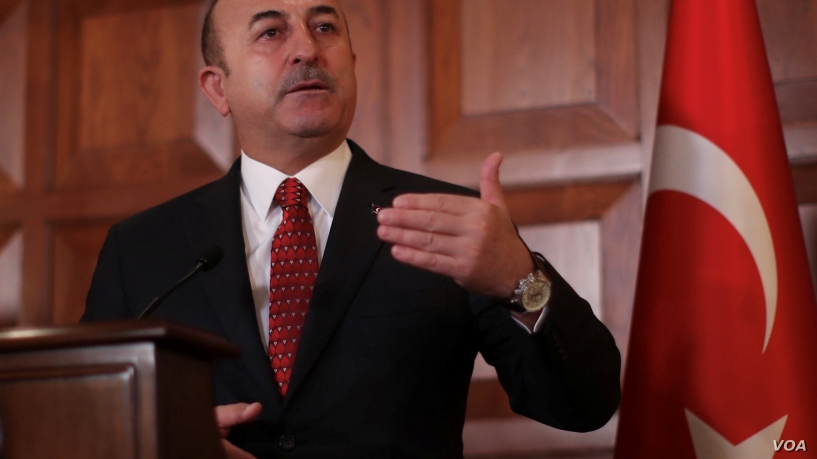 Turkish Foreign Minister Mevlüt Çavuşoğlu speaks during a news conference in Ankara, Turkey, Jan. 14, 2019. Photo © VOA