The Council of Europe (CoE) has decided to launch infringement proceedings against Turkey for failing to implement a judgment of the European Court of Human Rights (ECHR). The matter will now revert back to Europe’s top human rights court to assess whether a violation has occurred.
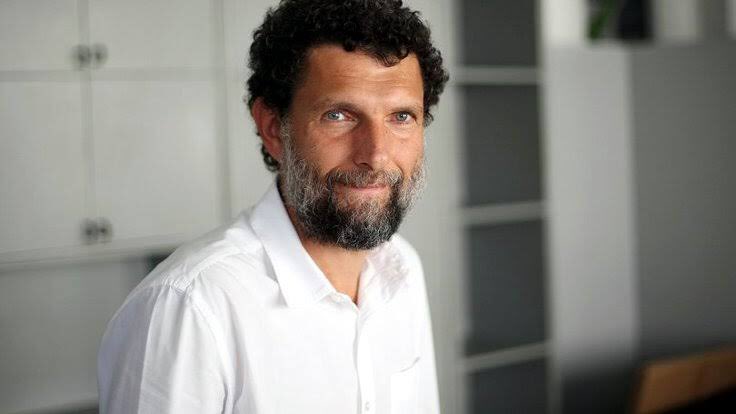
The ECHR had ordered the immediate release of Turkish businessman and philanthropist Osman Kavala in December 2019 following his imprisonment for two years without any conviction.
After assessing the evidence, the ECHR came to the conclusion that Mr Kavala’s detention breached his fundamental rights. The court found that there is insufficient evidence that he had committed an offence to keep him detained, and keeping him in pre-trial jail is in violation of his right to liberty and security under the European Convention on Human Rights.
Mr Kavala was originally charged by the Turkish authorities with financing the Gezi Uprising in 2013. When that case was dismissed, he was then charged with supporting the attempted coup in July 2016, and the Turkish authorities then decided to re-try him over Gezi.
The Committee of Ministers of the CoE, which is responsible for overseeing the implementation of the ECHR’s judgments, has repeatedly called on Turkey to adhere to the ECHR’s 2019 Kavala ruling.
At its meeting on 2 February, 32 of the 47 members of the Council of Europe voted in favour of launching proceedings against Turkey. The vote only just cleared the two thirds majority needed for such action.
Infringement proceedings against a CoE Member Stat are rare – this is only the second time that the CoE has used such proceedings against one of its member states. The first occasion was against Azerbaijan in 2017 following its refusal to release dissident Ilgar Mammadov.
The decision against Turkey, which under its own constitution is obligated to implement the ECHR’s rulings, did not come as a surprise. The CoE’s Committee of Ministers had threatened this action back in June 2021.
Last week, a spokesperson for the Committee of Ministers of the CoE said:
“The launch of infringement proceedings is a tool rarely used by the CoE Committee of Ministers and clearly indicates the serious concerns related with the case of Mr Kavala, who has been kept in prison for years without a conviction.
“It is regrettable that the Turkish authorities have refused to execute the respective ECHR’s ruling. Such attitude sets a worrying precedent and further increases the EU’s concerns regarding Turkish judiciary's adherence to international and European standards. It also runs counter to Turkey’s own obligations as a member of the Council of Europe and EU candidate country.”
“The European Union will continue to follow the case of Mr Kavala closely and look forward to the Court’s ruling in this question,” the spokesperson added.
Osman Kavala
Should the matter reach the ECHR and Turkey is found to be in breach of its legal obligations, the CoE can then apply a number of sanctions, including suspending Turkey’s voting rights and even its membership of the CoE.
Turkey denounces CoE decision – statement in full
The CoE’s announcement promoted an immediate rebuttal from Turkey through the Ministry of Foreign Affairs, which denounced the decision as “prejudiced and politically motivated”.
“The Committee of Ministers of the Council of Europe had adopted a decision on 2 December 2021 and notified Türkiye the intention of referring the Kavala case to the European Court of Human Rights (ECtHR) to determine whether Türkiye has executed the judgment of Kavala v. Türkiye and requested our views on the matter.
“In line with the spirit of cooperation we have displayed so far, our Government shared our views with the Council of Europe on 19 January 2022, in which we explained in detail that the ECtHR’s judgment has been executed, that Kavala’s detention was the result of another judicial proceeding and that the matter should be examined based on legal principles.
“Despite this, the Committee of Ministers of the Council of Europe adopted an interim decision today (2 February 2022) by a majority vote, that the case of Kavala be referred to the ECtHR. Thereby, the Committee of Ministers of the Council of Europe has maintained its stance that interferes with the independence of the judicial proceedings and violated the principle of respect for judicial proceedings.
“While there is a large number of judgments that are waiting to be executed by the member states on the agenda of the Committee of Ministers, which supervises the execution of the judgments of the ECtHR, constantly bringing the Kavala judgment forward on the agenda is a malicious, intentional and inconsistent approach.
“It is evident that this prejudiced and politically motivated decision, which disregards the domestic proceedings, damages the credibility of the European human rights system.
“In order to ensure effectiveness of the Council of Europe’s human rights system, the Committee of Ministers should set aside its biased and selective approach. Our expectation is that the ECtHR assesses this decision on a fair basis; and considering the pending domestic proceedings, does not act as a first instance court; and delivers its judgment in accordance with its case-law and principles, as well as the European Convention on Human Rights.”



 Osman Kavala
 “Despite this, the Committee of Ministers of the Council of Europe adopted an interim decision today (2 February 2022) by a majority vote, that the case of Kavala be referred to the ECtHR. Thereby, the Committee of Ministers of the Council of Europe has maintained its stance that interferes with the independence of the judicial proceedings and violated the principle of respect for judicial proceedings.
“While there is a large number of judgments that are waiting to be executed by the member states on the agenda of the Committee of Ministers, which supervises the execution of the judgments of the ECtHR, constantly bringing the Kavala judgment forward on the agenda is a malicious, intentional and inconsistent approach.
“It is evident that this prejudiced and politically motivated decision, which disregards the domestic proceedings, damages the credibility of the European human rights system.
“In order to ensure effectiveness of the Council of Europe’s human rights system, the Committee of Ministers should set aside its biased and selective approach. Our expectation is that the ECtHR assesses this decision on a fair basis; and considering the pending domestic proceedings, does not act as a first instance court; and delivers its judgment in accordance with its case-law and principles, as well as the European Convention on Human Rights.”
“Despite this, the Committee of Ministers of the Council of Europe adopted an interim decision today (2 February 2022) by a majority vote, that the case of Kavala be referred to the ECtHR. Thereby, the Committee of Ministers of the Council of Europe has maintained its stance that interferes with the independence of the judicial proceedings and violated the principle of respect for judicial proceedings.
“While there is a large number of judgments that are waiting to be executed by the member states on the agenda of the Committee of Ministers, which supervises the execution of the judgments of the ECtHR, constantly bringing the Kavala judgment forward on the agenda is a malicious, intentional and inconsistent approach.
“It is evident that this prejudiced and politically motivated decision, which disregards the domestic proceedings, damages the credibility of the European human rights system.
“In order to ensure effectiveness of the Council of Europe’s human rights system, the Committee of Ministers should set aside its biased and selective approach. Our expectation is that the ECtHR assesses this decision on a fair basis; and considering the pending domestic proceedings, does not act as a first instance court; and delivers its judgment in accordance with its case-law and principles, as well as the European Convention on Human Rights.”
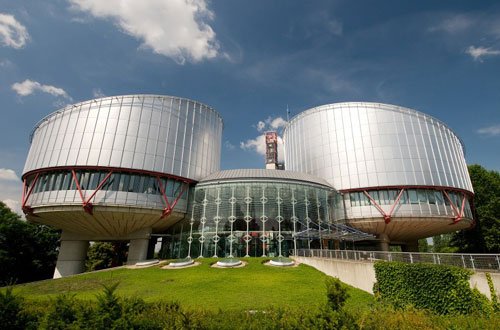 The European Court of Human Rights has ruled that Turkey's detention of Osman Kavala is unlawful
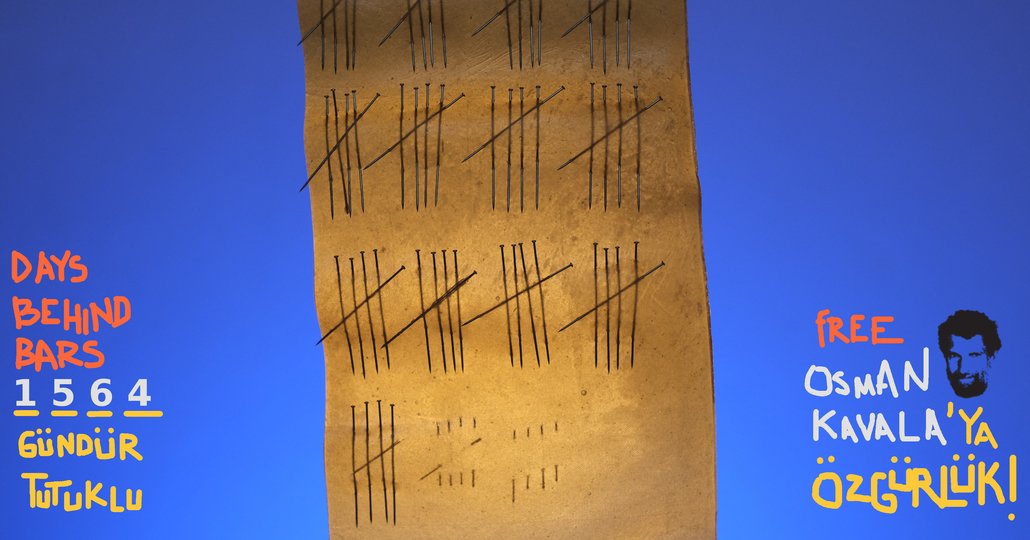
 Daily poster shared by the Osman Kavala campaign, showing how many days he has been incarcerated. This, from 11 Feb. 2022, shows 1564 days behind bars. Image © Twitter / Free Osman Kavala